
How EMDR and Mindfulness Work for Trauma and Anxiety Relief
Trauma and anxiety can show up without warning. Your body reacts, your thoughts race, and it can feel hard to stay grounded even when you know you are safe. These reactions often linger long after the real experience has passed.
That strain adds up. When the nervous system remains reactive, even ordinary moments can feel unsettled or hard to predict. Efforts to suppress memories or force calm often increase tension instead of easing it.
EMDR and Mindfulness are often used together to address this pattern in a more effective way. Both approaches are commonly used in trauma-informed care to help process unresolved experiences while supporting present-moment regulation.
What follows explains how EMDR and Mindfulness work together and how this combination supports trauma and anxiety relief.
How EMDR Works

EMDR stands for Eye Movement Desensitization and Reprocessing. It is a therapy approach used to help the brain process distressing experiences that have not fully resolved.
These experiences can continue to trigger strong emotional or physical reactions even when the danger has passed.
In EMDR, you briefly bring a difficult memory to mind while your therapist guides a form of bilateral stimulation, such as eye movements, tapping, or sounds. You are not asked to describe the event in detail or relive it fully. The focus is on allowing the brain to reprocess the memory in a more adaptive way.
Traumatic memories are often stored in a fragmented, emotionally intense form. EMDR helps the brain integrate these memories so they feel more distant and less activating.
The memory does not disappear, but it no longer carries the same emotional charge or sense of immediacy.
What Is Mindfulness? Your Anchor for Everyday Calm

Mindfulness is a practice of paying attention to what is happening in the present moment without trying to judge it or change it. This includes noticing thoughts, emotions, and body sensations as they arise. The goal is not to clear the mind, but to become more aware of what is happening right now.
For trauma and anxiety, Mindfulness helps increase awareness of early signs of distress. Instead of reacting automatically or becoming overwhelmed, you learn to pause and stay grounded in the present. This can support nervous system regulation and make emotional reactions feel more manageable.
Mindfulness does not aim to eliminate difficult thoughts or feelings. It changes how you relate to them, so they feel less intense and less controlling.
A simple Mindfulness practice might look like this:
Sit comfortably in a chair or on the floor
Bring attention to your breathing without changing it
Notice the sensation of the breath moving in and out
When your mind wanders, gently bring your focus back to the breath
Practicing Mindfulness with the guidance of a therapist can help ensure the practice is paced safely and adapted to individual needs.
Why Combine EMDR and Mindfulness? The Perfect Pair for Healing
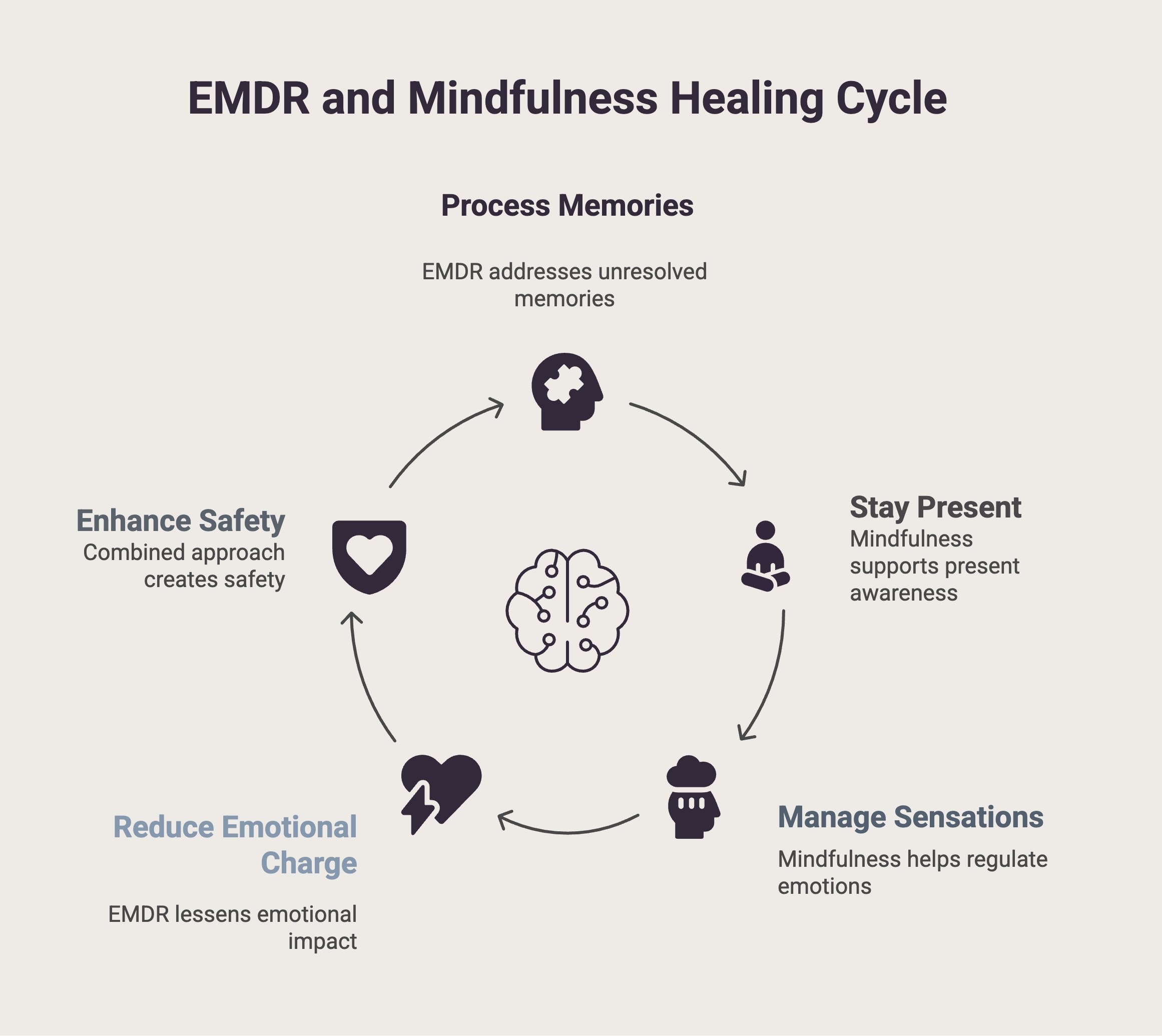
EMDR and Mindfulness support different parts of the healing process. EMDR focuses on processing unresolved memories that continue to trigger emotional or physical reactions. Mindfulness supports awareness and regulation in the present moment.
When used together, they address both memory processing and nervous system stability.
EMDR can bring up strong sensations, emotions, or memories as the brain works through past experiences. Mindfulness helps you stay oriented to the present while this is happening. It supports noticing what arises without becoming overwhelmed or disconnected.
One clinical study reported higher treatment engagement and completion rates when EMDR was integrated with Mindfulness-based regulation strategies, compared to trauma treatment approaches that focused on memory processing alone.
Together, EMDR and Mindfulness support a sense of safety during the healing process. EMDR helps reduce the emotional charge of past experiences, while Mindfulness helps you remain present and regulated as that work unfolds.
How a Typical EMDR and Mindfulness Session Flows

Sessions that combine EMDR and Mindfulness follow a clear structure designed to support safety and regulation throughout the process.
Preparing the Nervous System
Early sessions focus on preparation rather than trauma processing. The therapist gathers history, explains how EMDR works, and helps you develop grounding skills.
Mindfulness practices are introduced here to build awareness of body sensations, breathing, and emotional shifts. These skills help you stay present and regulated during later processing.
Processing Target Memories
Once you are ready, EMDR processing begins. You identify a specific memory or trigger, rate distress, and engage in bilateral stimulation such as eye movements, taps, or tones. The therapist guides attention while monitoring emotional and physical responses.
Mindfulness is used between sets to notice sensations or thoughts without engaging them, helping prevent overwhelm.
Regulating and Closing the Session
Each session ends with deliberate regulation. This may include grounding exercises, guided imagery, or brief mindfulness practices to bring the nervous system back to baseline.
The therapist checks your state before closing and helps plan gentle self-care between sessions. The goal is to leave feeling stable, not activated.
Where Processing Meets Presence
Healing from trauma and anxiety is not about forcing memories away or staying calm at all times. It is about creating enough safety for your nervous system to process what it has been holding.
EMDR and Mindfulness work together to support that process by addressing past experiences while helping you stay grounded in the present.
This combination allows change to happen at a pace your system can handle. With guidance and structure, reactions that once felt overwhelming can become easier to manage.
If you are looking for a trauma-informed approach that balances processing with stability, this may be a supportive option. Reach out today.
Frequently Asked Questions
Can EMDR and Mindfulness Be Used Together in Therapy?
Yes. EMDR and Mindfulness are often combined because they support different parts of healing. EMDR helps the brain process unresolved memories, while Mindfulness supports staying grounded in the present. Used together, they can make trauma work feel safer, steadier, and more manageable during sessions.
Is Mindfulness Required to Start EMDR Therapy?
You do not need prior Mindfulness experience to begin EMDR. Mindfulness skills are usually introduced gradually as part of therapy. The therapist helps adapt practices to your comfort level, so they support regulation without forcing focus or increasing distress during processing.
Does EMDR and Mindfulness Help With Anxiety?
While EMDR is well known for trauma treatment, it is also used for anxiety linked to past experiences. Mindfulness helps you notice anxious reactions earlier and stay present. Together, they support both reducing triggers and managing anxious responses as they arise.
What If Mindfulness Feels Hard or Uncomfortable at First?
That reaction is common, especially for people with trauma or high anxiety. Mindfulness does not require long meditation or emptying the mind. In therapy, practices are brief, flexible, and adjusted as needed. The goal is gentle awareness, not forcing calm or silence.
How Long Does Therapy Using EMDR and Mindfulness Take?
The length varies based on your history, goals, and pacing needs. Some people notice changes within a few sessions, while others need longer-term support. Therapy focuses on safety and stability rather than speed, with progress shaped collaboratively between you and your therapist.