
How to Regain Trust with Someone You Hurt with Consistent Change
Hurting someone you love can create distance that doesn’t fade with apologies. You may feel remorse, but trust still feels out of reach. If you’re searching for how to regain trust with someone you hurt, it’s often because the relationship hasn’t stabilized.
That gap can feel exhausting. The person you hurt may stay guarded or easily triggered, while you’re unsure what actually helps and what makes things worse. Without clear direction, many people repeat the same mistakes, even when their intentions are sincere.
As clinicians who work with couples recovering from relational injury, we see what truly rebuilds trust. It isn’t reassurance or promises. It’s consistent, observable change over time. This article explains what that change looks like and how it helps a hurt partner feel safe again.
Why Trust Breaks and Why It Heals

Trust breaks when actions repeatedly violate what someone needs to feel safe. Betrayal, secrecy, or broken promises can trigger the brain’s stress response, making the other person more alert and emotionally guarded.
Studies on interpersonal betrayal show that people become more vigilant and sensitive to social cues after being hurt, especially in close relationships. This is why trust does not return simply because someone apologizes.
After a rupture, the brain stays focused on preventing further harm. The nervous system remains on high alert, which makes inconsistencies stand out and calm harder to reach. Rebuilding trust requires new experiences that show safety over time, not one conversation.
Healing is possible, but it happens slowly. Trust begins to rebuild when actions become steady and predictable again. Over time, those actions can help the other person feel less on edge and more secure.
Both partners carry different emotional burdens in this process. The person who was hurt needs time to grieve what was lost and rebuild a sense of security. The person who caused the harm rebuilds trust by showing care, honesty, and reliability again and again.
With this understanding in mind, the next steps focus on how to regain trust with someone you hurt through actions that support safety and repair over time.
Step 1: Take Full Responsibility

Rebuilding trust starts with taking full responsibility for what you did. That means no minimizing, no excuses, and no shifting blame. The person you hurt needs to hear that you understand the impact, not just the event.
A sincere apology names the harm clearly. It sounds like, “I chose to lie, and that took away your sense of safety,” not “I’m sorry you felt hurt.” When responsibility is vague, trust can’t move forward.
Timing matters. Choose a calm moment to speak or write, and focus on acknowledging their experience. Listening matters more than explaining. Let them share how it affected them without correcting or defending yourself.
Taking responsibility can feel uncomfortable and bring up shame, regret, or fear of rejection. Staying present and fully honest, even when it’s hard, shows emotional maturity and creates the foundation of trust needed to rebuild.
Step 2: Create Safety Through Transparency

After trust is broken, secrecy causes more harm. Transparency means being open about your actions in ways that reduce uncertainty, especially when trust was damaged by hiding or dishonesty.
This may include sharing your schedule, being clear about where you are and who you are with, and checking in when plans change. Some people choose to share phone or location access for a period of time. These actions are about openness, not control.
Boundaries should be discussed and agreed on together. What feels necessary early on may change as trust begins to return. As consistency grows, transparency can ease naturally without being forced.
Step 3: Communicate with Empathy

After trust is hurt, conversations can feel tense or risky. Empathy helps create a sense of safety, so honest communication can happen again. This means focusing on understanding, not defending yourself.
Empathic communication includes:
Listening without interrupting or correcting
Using “I” statements instead of blame
Reflecting on what you hear before responding
Allowing emotions without trying to fix them right away
Simple responses matter. Saying “That makes sense” or “I see how that hurt you” helps the other person feel heard. Feeling understood often matters more than finding solutions.
Small moments of connection also support trust. Asking about their day, offering comfort, or staying present during hard emotions shows care beyond words.
Step 4: Build Trust Through Daily Consistency

Trust is rebuilt through repeated actions, not one-time efforts. Consistency shows that change is lasting, not temporary.
This may include:
Following through on what you say you will do
Being on time and reliable with everyday commitments
Communicating clearly when plans change
Being honest about your mood, stress, or availability
Doing agreed-upon tasks without needing reminders
These behaviors matter because they reduce uncertainty. When actions and words match over time, doubt slowly loses its grip.
Consistency doesn’t require perfection. It requires steadiness. When reliable behavior becomes routine, emotional safety has space to return.
Therapeutic Tools for Deeper Healing
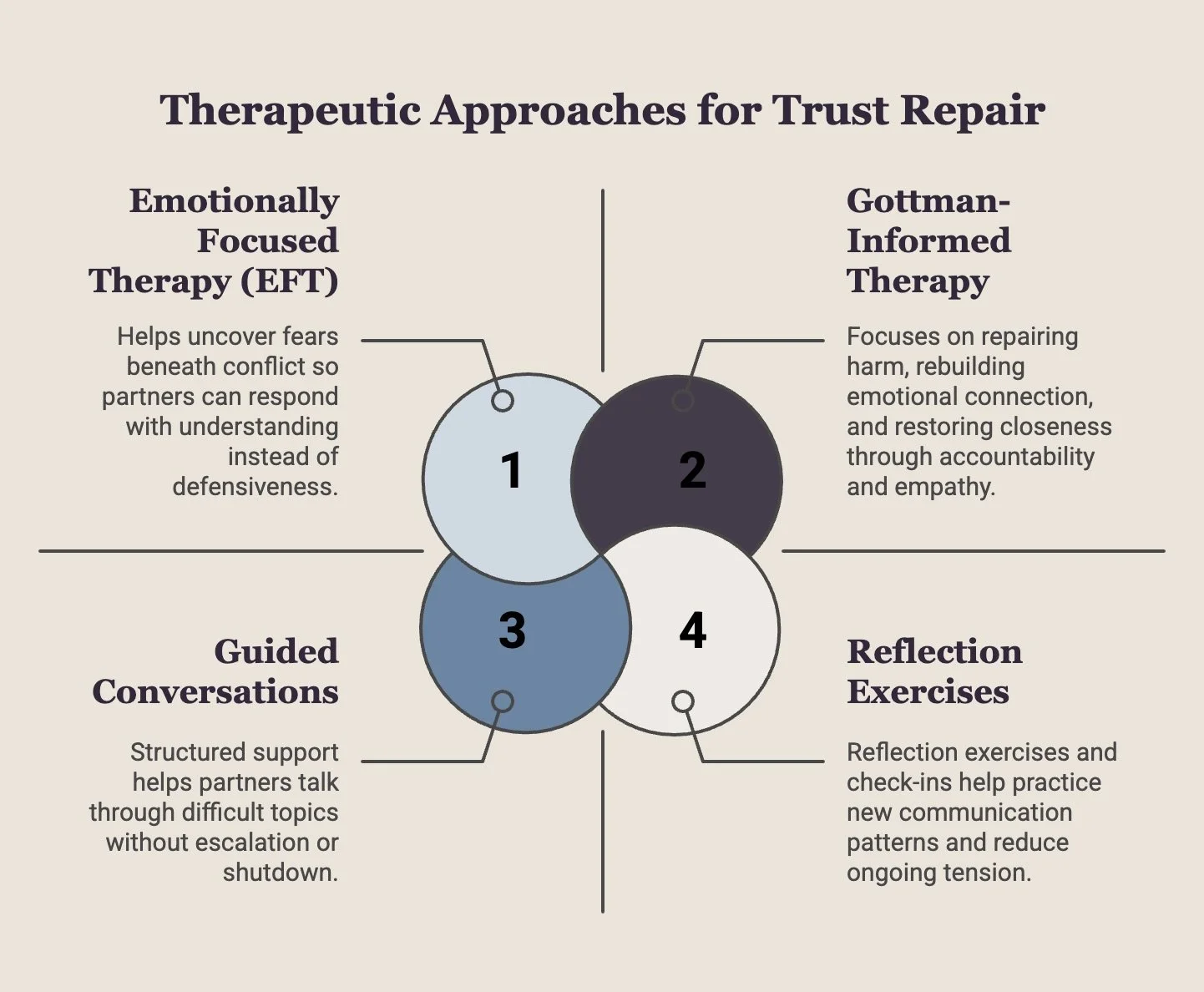
Sometimes trust can’t be repaired through effort alone. Working with a therapist can help both partners move through stuck patterns and have conversations that feel too difficult to manage on their own.
Common therapeutic approaches for trust repair include:
Gottman-Informed Therapy
Gottman-based approaches focus on repairing harm, rebuilding emotional connection, and restoring closeness. Sessions emphasize responsibility, empathy, and practical changes in how partners relate to one another.
Emotionally Focused Therapy (EFT)
EFT helps couples understand the fears and insecurities underneath anger, withdrawal, or conflict. By addressing these emotional patterns, partners can respond with more understanding instead of defensiveness.
Support Beyond Sessions
Therapy often includes guided conversations, reflection exercises, or structured check-ins between sessions. These tools help couples practice new ways of communicating and reduce ongoing tension.
Common Pitfalls to Avoid

Some behaviors can quietly slow or undo trust repair, even when intentions are good. Being aware of these patterns helps keep the focus on healing rather than reopening harm.
Common pitfalls include:
Getting defensive, such as explaining, justifying, or correcting the other person’s feelings, instead of listening
Rushing forgiveness, by pushing for closure or reassurance before trust has had time to rebuild
Maintaining contact tied to the harm, including continued communication with people connected to the breach
Minimizing the impact, by downplaying what happened or comparing it to other situations
Setting timelines for healing which can make the other person feel pressured or misunderstood
Avoiding these patterns helps create steadier ground for trust to return. When responsibility stays clear, and patience leads the process, repair is more likely to hold.
When to Seek Professional Help

Sometimes trust repair stalls, even when both people are trying. Repeated arguments, emotional distance, or long periods of silence can signal that outside support may help move things forward.
A therapist can provide structure and guidance when conversations feel stuck or overwhelming. Couples therapy offers a safe space to work through trust injuries together, while individual therapy can help address personal emotions and patterns that may be getting in the way.
Seeking professional help isn’t a sign of failure. For many couples, it creates the clarity and steadiness needed for trust to begin rebuilding again.
Where Trust Starts to Take Shape Again
Rebuilding trust after hurting someone is rarely quick or easy, but it is possible. How to regain trust with someone you hurt comes down to consistent change over time, taking responsibility, staying transparent, communicating with empathy, and showing reliability in everyday actions. When those patterns hold, emotional safety has a chance to return, even after deep harm.
If you and your partner feel stuck or unsure how to move forward, support can make a meaningful difference. Working with a therapist can help you navigate trust repair with clarity and care. Contact us today to begin rebuilding trust in a way that feels steady, respectful, and sustainable.
Frequently Asked Questions
Can trust really be rebuilt after someone is hurt?
Yes, trust can be rebuilt, but it requires time and consistent change. Apologies alone are not enough. Trust returns when actions become reliable, predictable, and aligned with words. The process is gradual and depends on patience, accountability, and the willingness to respect the injured partner’s pace.
How long does it take to regain trust in a relationship?
There is no fixed timeline for rebuilding trust. Some people notice small shifts within months, while deeper repair can take much longer. Progress depends on the severity of the harm, consistency of behavior, and whether both partners feel emotionally supported during the process.
What if the person I hurt keeps bringing up the past?
Revisiting the past often means the injury still feels unresolved. Listening without defensiveness helps more than trying to move the conversation forward quickly. Repeated questions or concerns usually reflect a need for reassurance through behavior, not explanations or repeated apologies.
Is transparency the same as losing privacy?
Transparency does not mean giving up all privacy forever. Early on, openness can help reduce uncertainty after trust is broken. Over time, boundaries can adjust as safety returns. Transparency works best when it is discussed openly and agreed on, not demanded or enforced.
When should a couple consider therapy for trust issues?
Therapy can help when conversations feel stuck, emotions escalate quickly, or distance continues despite effort. A therapist provides structure and support for working through trust injuries safely. Seeking help is not a failure, it often helps couples move forward with more clarity and steadiness.