
Treating Psychological Trauma to Regain Stability and Confidence
Psychological trauma can quietly take over your life. Flashbacks, constant tension, avoidance, and feeling on edge can make even ordinary days exhausting and unpredictable.
When your nervous system stays stuck in survival mode, sleep suffers, relationships strain, and confidence slowly erodes. Many people try to push through, hoping time alone will fix it, only to feel more disconnected and worn down.
Treating psychological trauma offers a structured way out. Evidence-based therapies help calm the brain, reduce symptoms, and restore a sense of safety over time.
This guide explains how trauma shows up, what treatments work, and how recovery actually happens step by step.
Spotting Psychological Trauma Symptoms Early

Before healing can begin, psychological trauma first needs to be recognized. Many people live with symptoms for years without realizing their reactions are trauma-related.
These symptoms often appear in everyday life, not only when thinking about the original event. Common signs include:
Flashbacks or nightmares that replay what happened
Hypervigilance or feeling on edge at small noises
Emotional numbness or pulling away from others
Avoidance of people, places, or conversations
Irritability or anger over minor issues
Negative thoughts about yourself or the world
Difficulty concentrating on daily tasks
Risky behaviors are used to escape discomfort
Ongoing physical tension, like headaches or tight muscles
When symptoms are named early, treating psychological trauma becomes more effective.
Proven Ways to Treat Psychological Trauma

Treating psychological trauma works best when therapy targets how trauma affects the brain, thoughts, and body. These approaches are backed by decades of research and are recommended as first-line treatments because they help the nervous system relearn safety.
1. Cognitive Processing Therapy (CPT)
CPT helps you identify and change unhelpful thoughts and beliefs that developed after trauma. Trauma often creates rigid ideas like “I’m not safe,” “I caused this,” or “The world is dangerous.”
CPT teaches you how to examine those beliefs, test them, and replace them with more accurate ones, which reduces guilt, fear, and emotional distress over time.
2. Prolonged Exposure (PE)
Prolonged Exposure works by reducing fear through safe, repeated exposure to trauma reminders. Avoidance keeps trauma alive by teaching the brain that memories and triggers are dangerous.
PE gradually helps you face memories and avoid situations until your brain learns they no longer pose a threat, lowering anxiety and restoring confidence.
3. Eye Movement Desensitization and Reprocessing (EMDR)
EMDR helps the brain reprocess traumatic memories so they lose their emotional charge. While recalling parts of the trauma, the therapist guides bilateral stimulation, such as eye movements. This process helps the brain store the memory in a less distressing way, reducing flashbacks and emotional overwhelm without needing detailed retelling.
4. Trauma-Focused Cognitive Behavioral Therapy (TF-CBT)
TF-CBT helps children and teens process trauma while building coping and emotional regulation skills. It combines education about trauma, relaxation tools, and gradual discussion of the event at a safe pace. Caregivers are involved to strengthen support and restore a sense of safety at home.
New Tools for Treating Psychological Trauma
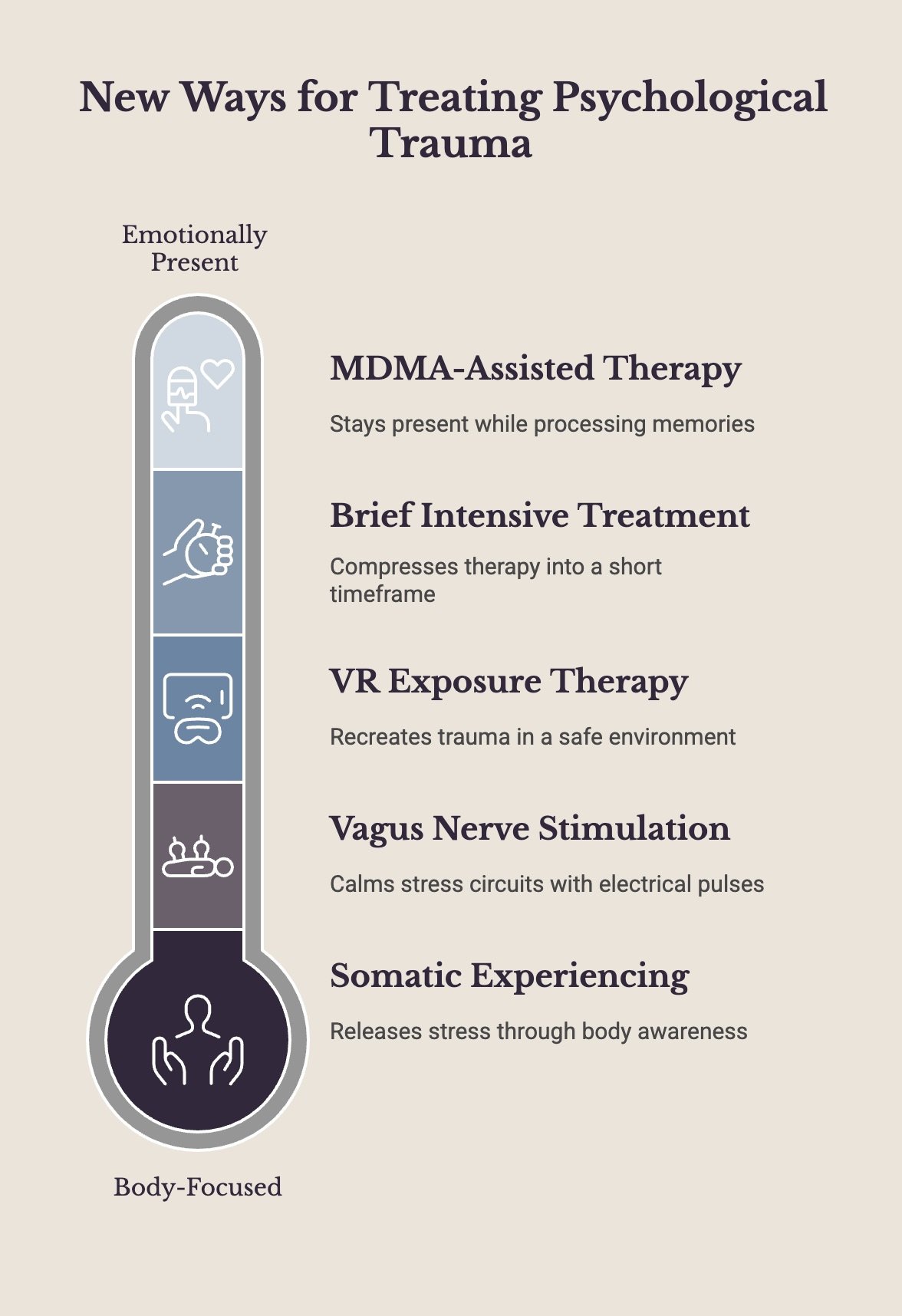
New tools for treating psychological trauma expand options when standard therapy alone is not enough. These approaches are backed by emerging research and are often used alongside established treatments. They focus on calming the nervous system and helping the brain process trauma more safely.
1. MDMA-Assisted Therapy
MDMA-assisted therapy helps people stay emotionally present while processing traumatic memories. The medication reduces fear and defensiveness, allowing the brain to revisit trauma without shutting down.
In a large Phase 3 clinical trial, about 71% of people who received MDMA-assisted therapy no longer met PTSD criteria after three sessions, and about 86% experienced a meaningful reduction in symptoms.
2. Vagus Nerve Stimulation (VNS)
Vagus nerve stimulation works by calming overactive stress circuits in the brain. Small electrical pulses support the body’s ability to shift out of fight-or-flight while trauma memories are addressed. When paired with exposure therapy, it helps the nervous system learn that memories are no longer dangerous.
3. Somatic Experiencing
Somatic Experiencing focuses on how trauma lives in the body, not just the story. Instead of retelling events, therapy tracks physical sensations like tension, breath, or numbness. This helps release stored stress and restores a sense of bodily safety over time.
4. Brief Intensive Trauma Treatment
Brief intensive trauma treatment compresses therapy into a short, focused timeframe. Longer sessions over several days reduce avoidance and keep momentum strong. This format helps some people make progress without months of anticipation between sessions.
5. Virtual Reality (VR) Exposure Therapy
VR exposure therapy recreates trauma-related situations in a controlled, safe setting. The brain practices facing triggers while learning that no real danger exists. Repeated exposure helps fear responses fade, similar to in-person exposure work.
Steps to Start Treating Psychological Trauma

Treating psychological trauma works best when you take it one step at a time. These steps help you start without feeling overwhelmed.
Notice your symptoms: Pay attention to flashbacks, avoidance, sleep problems, or constant tension. Write down what disrupts your daily life most.
Find a trauma-trained therapist: Look for providers trained in EMDR, CPT, or PE through trusted directories like EMDRIA or PTSD.va.gov.
Ask the right questions: Ask about trauma experience, pacing, and how they help clients feel safe before deep work begins.
Prepare your body first: Learn simple grounding tools like slow breathing or short walks to calm your nervous system.
Plan recovery time: Leave space after sessions to rest, not rush back into stress.
Track progress weekly: Rate symptoms from 1–10 so you can see change over time, even when it feels slow.
Where Healing Becomes Possible
Healing from psychological trauma is not about erasing the past. It focuses on helping your nervous system feel safe enough for life to move forward again. With the right support, symptoms ease, and daily life becomes more manageable.
Healing does not happen all at once. It begins with one steady step and clear guidance. If you are ready to begin treating psychological trauma in a structured, supportive way, contact us today to talk through your next step.
Frequently Asked Questions
Can psychological trauma be treated successfully?
Yes. Treating psychological trauma is effective for many people. Evidence-based therapies help calm the nervous system, reduce symptoms, and restore daily functioning when treatment is consistent and properly paced.
How long does treating psychological trauma take?
Treatment length varies. Some people notice improvement within weeks, while others need several months. Progress depends on trauma type, support, and how consistently therapy tools are practiced.
Do I have to talk about everything that happened?
No. Many trauma therapies focus on safety, skills, and body regulation. You share details only when ready. Healing does not require retelling every part of the experience.
Can trauma symptoms get worse before they improve?
Sometimes symptoms briefly intensify as awareness increases. A trained therapist helps pace treatment, stabilize the nervous system, and prevent overwhelm so progress stays manageable and safe.
Is therapy still helpful years after trauma happened?
Yes. Trauma can affect the nervous system long after events end. Treating psychological trauma later in life can still reduce symptoms, improve confidence, and restore emotional balance.