
Signs of unresolved trauma can show up as unwanted memories, avoiding reminders, staying on guard, emotional numbness, persistent self-blame, or pulling away from people. These reactions deserve attention when they keep disrupting sleep, work, relationships, or ordinary routines.
“Unresolved trauma” is descriptive language, not a diagnosis. Similar difficulties can have other causes. Describing when these patterns occur and how they affect your day gives you specific concerns to bring to a trauma therapy assessment.
How unresolved trauma in adults can show up in daily life
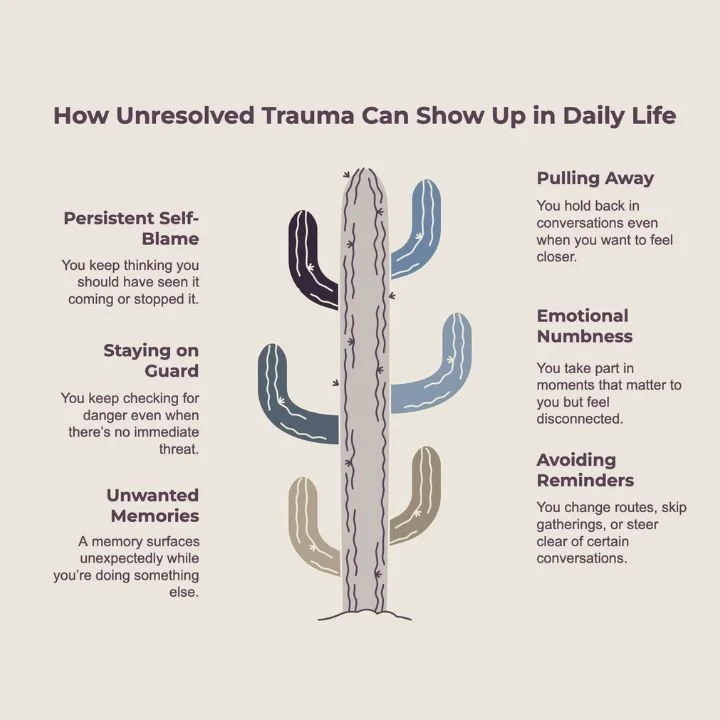
Unresolved trauma in adults can affect emotional responses, physical well-being, relationships, and daily habits. The VA describes similar reactions after trauma, which the examples below illustrate in everyday situations.
1. Unwanted memories interrupt ordinary moments
Memories of a frightening experience may enter your mind when you’re doing something unrelated. A sound, smell, phrase, or place can bring back an image and make it hard to focus.
A 2010 review of trauma memories in posttraumatic stress disorder (PTSD) explains that intrusive memories arrive involuntarily, rather than through deliberate reflection. It also notes that unwanted memories can occur after trauma without indicating a disorder.
You might be reading an email when the memory arrives, then need time before you can return to work. Write down the reminder, your reaction, and how long the interruption lasted, since that record shows a clinician the pattern.
2. You change your routines to avoid reminders
Avoidance means changing plans to stay away from reminders, such as a route, a gathering, or a conversation. It can bring short-term relief, which makes the pattern easy to miss. Gradually, it can limit your work, travel, and social life.
Describe the activities you’ve stopped and what each change costs you. Treatment should distinguish between reminders that are safe to approach and situations that remain dangerous.
Never test yourself by returning to an unsafe person or place.
3. You stay on guard even when there’s no immediate threat
Staying on guard can mean watching for danger when there’s no immediate threat, such as repeatedly checking the doorway during dinner.
Clinicians call persistent scanning for danger hypervigilance. Startling easily is a separate reaction that can occur alongside it. The practical consequence is that attention stays occupied with checking for threats, leaving less room for rest, work, or conversation.
Describe any current risks, because reasonable precautions in an unsafe setting aren’t a symptom to dismiss.
4. You feel numb during moments that usually matter to you
Emotional numbness can feel like participating without feeling connected. You may attend a celebration, listen to someone you love, or complete a familiar activity while feeling distant from it. It can be confusing, especially when you still care about those people.
A precise description helps more than calling yourself uncaring. “I care about this, but I can’t feel much” gives a clinician more to work with. Numbness alone doesn’t show its cause, so note when it occurs, how long it lasts, and any changes in mood, sleep, or concentration.
5. You keep blaming yourself for what happened
Persistent self-blame can appear as repeatedly deciding you should have predicted, prevented, or stopped the harm. The conclusion remains painful even when other people tell you that you weren’t responsible.
A thought like “I should have known” can treat information learned afterward as something you had at the time. A therapist can help you examine that belief against what you knew and could realistically do then.
For adults affected by early experiences, therapy for childhood trauma can address beliefs connected to those events. Talk about the specific thought and its effect on your choices, rather than trying to replace it with reassurance you don’t believe.
6. You pull away from people you want to feel close to
Unresolved trauma in relationships can show up as turning down invitations, holding back feelings, or ending conversations when they turn personal. Distance that keeps conflicting with the connection you want deserves attention. A useful description is “I want to talk to my partner, but I shut down when the conversation becomes personal.”
Pulling away doesn’t establish that past trauma is the cause. Describe the other person’s behavior as well as your response, because current mistreatment needs to be addressed.
When to seek help for recurring trauma reactions

Seek an assessment when signs of unresolved trauma persist, worsen, or disrupt work, relationships, sleep, or daily activities. You can discuss recent incidents, including the situation, your thoughts, emotions, actions, recovery time, and any current stress or threats.
An assessment considers your history, current symptoms, and other possible explanations before recommending treatment for memories, avoidance, beliefs, or sleep. Ask what each proposed treatment addresses and how progress will be measured.
CBT / EMDR Therapy of Manhattan offers in-person care in Manhattan and online therapy across New York. Schedule your free consultation to share your concerns and learn about treatment options that suit your needs.
FAQs about signs of unresolved trauma
Is unresolved trauma the same as PTSD?
No. “Unresolved trauma” is nonformal wording for lingering difficulties after trauma, not a formal diagnosis. PTSD is a specific condition with defined diagnostic criteria. A person can have lasting emotional, behavioral, or physical difficulties from past trauma without meeting the full criteria for PTSD.
Can trauma reactions show up years after an event?
Yes. Some reactions emerge years later, and others were present all along but became more noticeable over time. The National Institute of Mental Health notes that PTSD symptoms usually begin within three months of a traumatic event, but they can develop later.
Can unresolved trauma affect your sleep even without nightmares?
Yes. Trauma-related sleep difficulties can include trouble falling asleep, waking often, or feeling too alert at bedtime. Stress and heightened arousal can make it hard for your body to relax and stay asleep. Other health factors also affect sleep, so a healthcare professional can help identify the cause.
How can you tell if a reaction is tied to past trauma or a current relationship problem?
Look at what is happening in the relationship now, alongside patterns in your reactions. Describe the other person’s behavior, what you expected, and how you respond in other situations. A clinician can help assess both. Past trauma doesn’t excuse current mistreatment, and both concerns can exist at the same time.
Can an online trauma test tell you what’s causing your symptoms?
No. A screening questionnaire can flag symptoms worth discussing, but it can’t determine their cause or replace an assessment. Bring the results and recent examples to a licensed clinician, and ask what the questionnaire measures. A PTSD screen doesn’t assess every possible effect of trauma.