
Anxiety CBT Techniques To Build Healthier Thinking Patterns
Anxiety can appear in everyday moments. Your heart might race before a meeting, or your mind may jump to thoughts like “What if I mess this up?” Even when you want to stay calm, those reactions can feel difficult to slow down.
These responses often follow a predictable pattern. Worrying thoughts trigger physical tension, which can make ordinary situations feel more stressful than they need to be. When this cycle repeats, focus and confidence can become harder to access.
Anxiety CBT techniques offer practical ways to interrupt this pattern. Cognitive Behavioral Therapy helps people recognize anxious thinking and practice more balanced responses.
In our clinical practice, therapists often see how structured CBT tools help people build steadier thinking patterns. The next sections explain several techniques commonly used in CBT to support healthier thinking patterns and calmer responses.
How CBT Helps Break the Anxiety Cycle
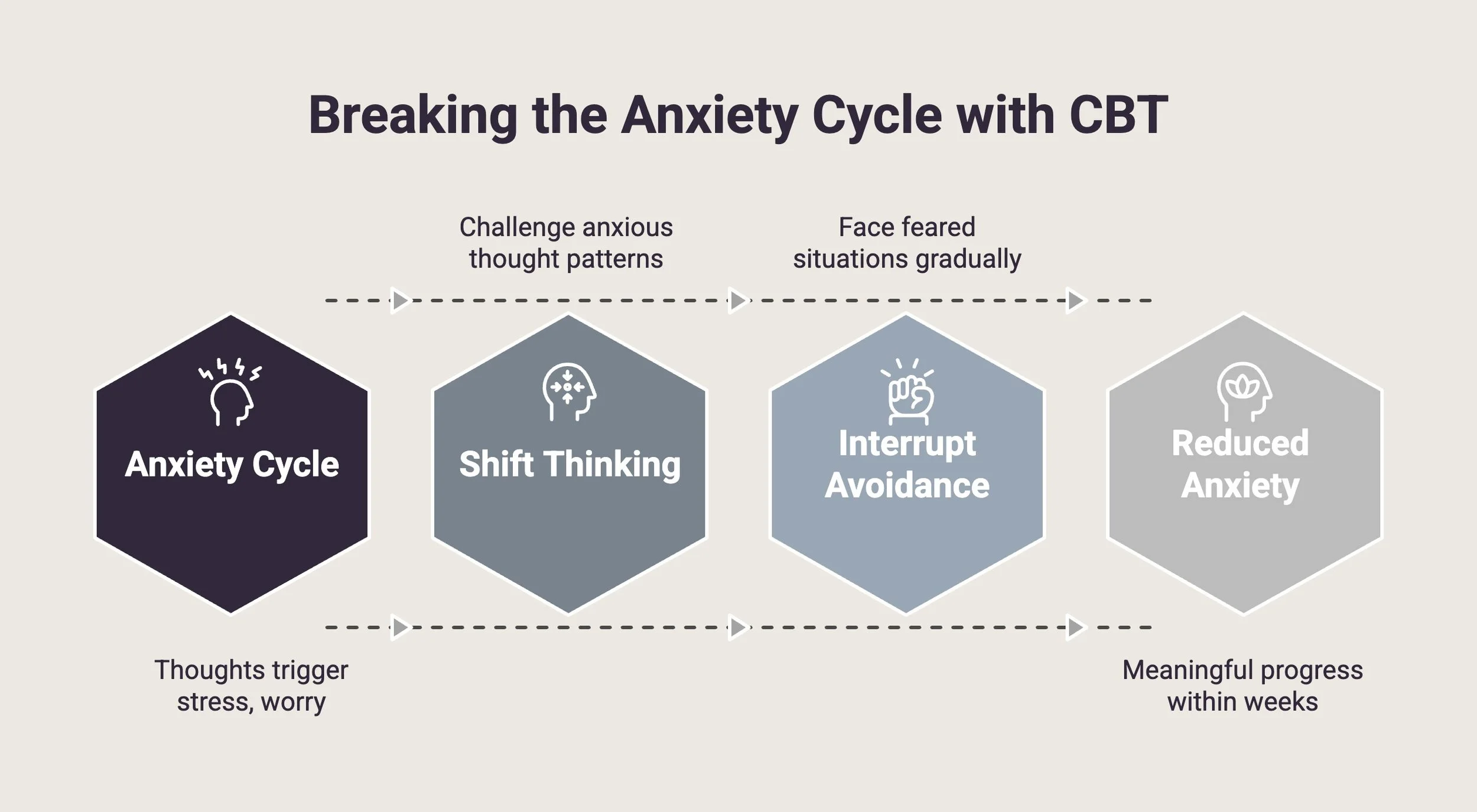
Cognitive Behavioral Therapy explains anxiety as a pattern between thoughts, emotions, and behavior. A thought can trigger physical stress and worry. Those reactions may lead someone to avoid the situation, which can strengthen the fear.
Avoidance often brings short relief. At the same time, it can reinforce the anxiety connected to that situation. When the situation appears again, the response can return quickly.
Anxiety CBT techniques focus on interrupting this cycle. In therapy, clinicians guide people through practical exercises that help shift anxious thinking and avoidance patterns.
Research shows CBT produces moderate to large improvements in anxiety symptoms, with many people noticing meaningful progress within 4 to 12 weeks of treatment.
Technique 1: Cognitive Restructuring

Cognitive restructuring is one of the most widely used anxiety CBT techniques. Anxiety often creates automatic thoughts that predict negative outcomes, such as “Everyone will judge me” or “I will fail.” These thoughts can feel convincing even when the situation does not fully support them.
In therapy, people learn to slow down and examine these reactions more carefully. Instead of accepting the thought automatically, they evaluate the evidence and consider other possible explanations. This process is often practiced using a few steps:
Notice the thought: Identify the anxious thought and the situation where it appears. Rate your anxiety on a scale from 1 to 10.
Examine the evidence: Ask what evidence supports the thought and what evidence challenges it. This step helps create distance from the initial reaction.
Create a balanced response: Replace the original thought with a more realistic interpretation of the situation.
Technique 2: Exposure Therapy

Exposure therapy is a CBT technique that helps people gradually face situations they fear. Anxiety often leads people to avoid places, activities, or experiences that trigger worry. While avoidance may feel safer in the moment, it can keep the fear active.
This technique is usually practiced through a series of gradual stages:
Build a fear hierarchy: List situations that trigger anxiety from least stressful to most stressful. This creates a step-by-step plan for approaching the fear.
Start with smaller exposures: Begin with a situation that causes mild anxiety. A therapist guides the exercise and helps you remain in the situation long enough for the anxiety to decrease.
Progress gradually: Once a step feels more manageable, move to the next situation on the list. Each step helps build confidence and reduces the fear response.
Technique 3: Behavioral Experiments

Behavioral experiments help check if an anxious thought is actually true. Instead of only thinking about what might happen, the idea is to try a small action and see the real outcome.
This technique helps replace assumptions with real experiences. When the situation is tested, the result often gives clearer information than the anxious prediction.
How it works:
Identify the prediction: Notice the thought connected to the situation. For example, believing that asking a question in a meeting will lead to negative reactions.
Try the situation: Take a small action that allows you to observe what happens. This could be asking the question or starting a short conversation.
Reflect on the result: Afterward, compare what you expected with what actually happened. This reflection helps create more realistic expectations in similar situations.
Technique 4: Scheduled Worry Time

Scheduled worry time is a technique used to manage constant rumination. Anxiety can cause the mind to return to the same worries throughout the day, often interrupting focus and making it difficult to stay present.
This approach creates a specific time each day to think about those concerns. When worries appear earlier in the day, they are written down in a journal or note and saved for that scheduled period. Knowing there is a time to return to them later can make it easier to refocus on the present moment.
During the worry period, the person reviews the list and reflects on the concerns more intentionally. Some worries may lead to problem-solving, while others may feel less urgent by the time they are revisited. This structure helps reduce the constant mental cycle of rumination.
Technique 5: Relaxation Strategies Such as Diaphragmatic Breathing

Relaxation techniques help calm the physical symptoms that often appear with anxiety. A racing heart, tight muscles, or shallow breathing can make anxious thoughts feel stronger. Techniques that slow the body’s stress response can help restore a sense of balance.
Ways to practice this technique include:
Diaphragmatic Breathing
Place one hand on your abdomen. Inhale slowly through your nose for four seconds, pause briefly, then exhale through your mouth for six seconds. Repeat for a few minutes.
Grounding Exercise
Use the 5-4-3-2-1 method. Name five things you see, four you feel, three you hear, two you smell, and one you taste to bring attention back to the present moment.
Find Support for Changing Anxiety Patterns
Anxiety can make everyday situations feel overwhelming, especially when the same thoughts and reactions repeat again and again. Anxiety CBT techniques help interrupt that cycle by teaching practical ways to examine anxious thinking and respond more calmly to stress.
With practice, these skills can help people approach challenges with greater clarity and steadiness.
If you feel ready for additional guidance, professional support can help you apply these skills in a structured and supportive environment. Contact us today to begin working toward more balanced and confident responses to anxiety.
Frequently Asked Questions
What Are Anxiety CBT Techniques?
Anxiety CBT techniques are structured strategies used in Cognitive Behavioral Therapy to manage anxious thoughts and behaviors. They help people recognize worry patterns, challenge unhelpful thoughts, and practice healthier responses to stress.
How Long Do CBT Techniques Take To Work For Anxiety?
CBT techniques for anxiety often begin showing improvement within several weeks of consistent practice. Many people notice meaningful changes within about 4 to 12 weeks.
Can Anxiety CBT Techniques Be Practiced At Home?
Yes, some anxiety CBT techniques can be practiced at home between therapy sessions. Common exercises include thought records, breathing techniques, and scheduled worry time.
Which Anxiety Conditions Respond Well To CBT Techniques?
CBT techniques are commonly used for generalized anxiety disorder, social anxiety disorder, panic disorder, and specific phobias. The therapy focuses on changing thought and behavior patterns that maintain anxiety.
When Should Someone Consider Therapy For Anxiety?
Someone should consider therapy when anxiety begins interfering with work, relationships, sleep, or daily responsibilities. Professional support may help when self-help strategies are not providing enough relief.