
Can EMDR Help With Panic Attacks? What To Expect In Treatment
Panic attacks can feel sudden and overwhelming. Your heart may race, breathing becomes tight, and your body reacts as if something dangerous is happening. Even after the episode passes, the fear of another attack can remain.
Because panic can be connected to how the brain processes fear and past experiences, some therapies focus on helping the brain reprocess those triggers.
Can EMDR help with panic attacks? Eye Movement Desensitization and Reprocessing (EMDR) is a therapy designed to help the brain process distressing experiences that continue to trigger strong fear responses.
In therapy, EMDR helps clients process experiences that continue to trigger panic responses. This article explains how the approach works and what treatment may look like for panic attacks.
What Are Panic Attacks?

Panic attacks are sudden episodes of intense fear that trigger strong physical reactions. They can appear without warning and often feel overwhelming while they are happening.
Most panic attacks reach their peak within minutes before the body gradually begins to settle. Common symptoms may include:
Racing heartbeat or chest discomfort
Shortness of breath or dizziness
Sweating, shaking, or chills
Nausea or stomach discomfort
Feeling detached or out of control
These reactions are part of the body’s natural fight-or-flight response. During a panic attack, the nervous system activates even though there may not be an immediate physical danger.
For some people, the memory of the first panic attack can also create ongoing fear about when the next one might happen.
How EMDR Works for Panic Attacks
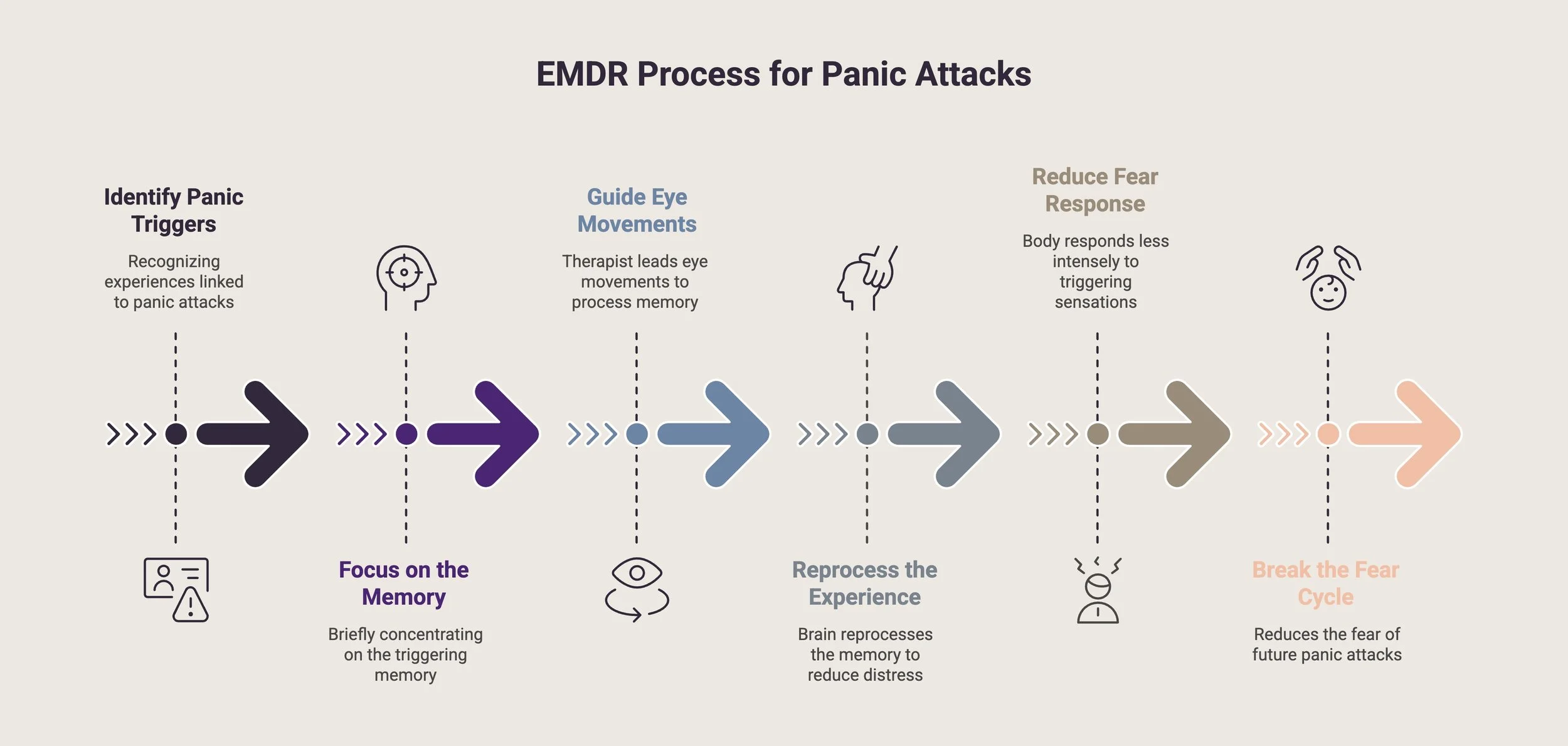
EMDR helps reduce panic attacks by working with the experiences and sensations that trigger them. Panic often becomes linked to a specific memory, such as the first panic episode or a moment when physical sensations felt overwhelming.
EMDR helps the brain process these experiences so they no longer trigger the same level of fear.
Identifying Panic Triggers
EMDR begins by identifying the experiences connected to panic attacks. This may include the first panic episode, a stressful event, or physical sensations like a racing heart that later trigger fear.
Processing the Memory
During EMDR, the person briefly focuses on the memory while the therapist guides eye movements, taps, or tones. This process helps the brain reprocess the experience, so it becomes less distressing.
Reducing the Fear Response
As the memory becomes less intense, the body may respond differently to the sensations that once triggered panic. Physical symptoms such as dizziness or a racing heart can begin to feel less threatening.
Breaking the Fear Cycle
Panic attacks often create a cycle where the fear of another attack increases anxiety. EMDR helps reduce this “fear-of-fear” response, which can make future panic attacks less likely and easier to manage.
EMDR vs. Other Panic Attack Treatments

Several treatments can help reduce panic attacks, and each approach works in a different way. Some focus on changing thought patterns, while others help regulate physical symptoms or process distressing experiences.
Eye Movement Desensitization and Reprocessing (EMDR)
EMDR focuses on processing distressing memories or experiences that may still trigger panic responses. It is often used when panic attacks are connected to earlier events or strong fear reactions.
Cognitive Behavioral Therapy (CBT)
CBT helps people recognize anxious thoughts and change the behaviors that maintain panic. It also teaches practical coping strategies for managing physical sensations and worry.
Medication (such as SSRIs)
Medications may help regulate brain chemistry and reduce the overall intensity of anxiety symptoms. They are sometimes used alongside therapy as part of a broader treatment plan.
Exposure-based approaches
Exposure therapy gradually helps people face situations or sensations connected to panic. Over time, this can reduce avoidance and increase confidence in managing symptoms.
In our work with clients, EMDR is sometimes combined with CBT strategies to help address both the underlying experiences and the coping skills needed to manage panic symptoms.
Is EMDR Right for You?

EMDR is considered a safe therapy when provided by a trained clinician. Therapists typically begin with an assessment to understand symptoms, current stability, and treatment goals before starting EMDR processing.
EMDR can often be used alongside medications such as SSRIs or other anxiety treatments. If medication is part of your care, it is important to discuss treatment plans with both your therapist and prescribing provider.
Not every situation requires EMDR, and treatment decisions are usually based on individual needs, symptoms, and clinical history. A therapist can help determine if EMDR may be appropriate for addressing panic attacks.
Next Steps for Panic Support

If panic attacks have been affecting your daily life, a few small actions can help you begin understanding your triggers and responses.
Note recent panic experiences: Write down when panic attacks occur and what situations or sensations appear beforehand.
Practice calming breathing: Try slow breathing exercises, such as inhaling for four seconds, holding briefly, and exhaling slowly.
Consider a therapy consultation: Speaking with a therapist can help determine if approaches like EMDR may be helpful for your specific situation.
Taking gradual steps toward support can help create a clearer path for managing panic symptoms.
Shifting the Panic Response with EMDR
Can EMDR help with panic attacks? EMDR therapy works by helping the brain process distressing experiences that may still trigger panic responses.
As those experiences become less emotionally intense, the physical sensations and situations connected to panic can begin to feel less threatening.
If panic attacks are affecting your daily life, professional guidance can help you explore treatment options and determine if EMDR therapy is appropriate for your needs. Reach out today to learn more about getting started.
Frequently Asked Questions
Can EMDR Help With Panic Attacks?
Yes, EMDR can help reduce panic attacks by processing distressing memories or sensations that trigger the body’s fear response. As these experiences are reprocessed, the intensity and frequency of panic reactions may decrease.
How Long Does EMDR Take To Help Panic Attacks?
Some people notice improvement after several EMDR sessions. The timeline depends on the experiences connected to the panic attacks and how the brain processes those memories during therapy.
What Happens During EMDR Treatment For Panic Attacks?
During EMDR treatment, the therapist focuses briefly on a memory connected to panic while guiding eye movements, taps, or tones. This process helps the brain reprocess the experience, so it becomes less distressing.
Can EMDR Be Used With Medication For Panic Attacks?
Yes, EMDR therapy can be used alongside medications prescribed for panic or anxiety. Therapists and medical providers may coordinate treatment to support both symptom relief and emotional processing.
Is EMDR Effective For Panic Disorder?
Research suggests EMDR can help reduce panic disorder symptoms. It may be especially helpful when panic attacks are connected to distressing experiences or strong learned fear responses.