
How to Overcome Hopelessness When You Feel Stuck
If you want to know how to overcome hopelessness, start by treating it as a real emotional state rather than a personal flaw. It can make daily life feel heavy and harder to move through.
Hopelessness often builds when stress or emotional pain has been going on for too long. You may still be getting through work and daily routines while feeling shut down underneath it.
Knowing what’s behind that feeling can help you respond more clearly. We’ll look at why hopelessness shows up, what can help, and when therapy may be the right next step.
Why people start feeling hopeless

Hopelessness rarely shows up all at once. It builds up over time when emotional strain goes on for too long.
As low mood deepens, it can start changing how you think about yourself, your life, and what comes next. Research shows that hopelessness is a common symptom of depression, and 4.8% of U.S. adults regularly report feelings of depression.
That’s part of what makes hopelessness easy to miss at first. You may still be working, replying to people, and getting through the week while feeling flat.
Seeing that pattern is part of how to overcome hopelessness. It helps you treat the feeling as a signal that something needs attention, not as proof that nothing will change.
How to overcome hopelessness step by step
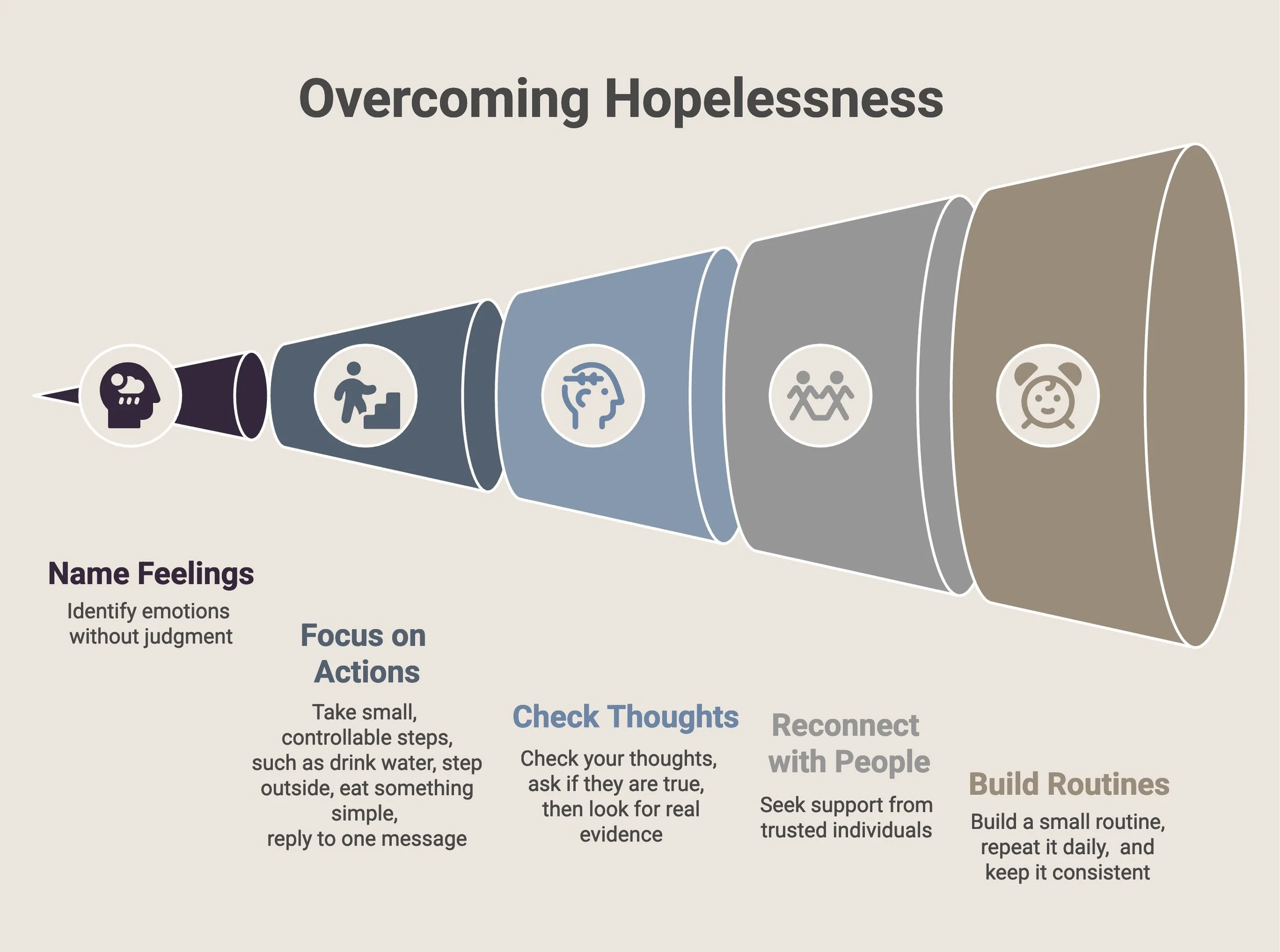
If you’re trying to figure out how to overcome hopelessness, start smaller than your mind tells you to.
When hopelessness sets in, even ordinary problems can start to feel heavier and harder to sort through. The first goal is to create enough stability to see what needs your attention next.
1. Name what you’re feeling without judging it
Use plain language.
You may feel hopeless, numb, flat, drained, or emotionally shut down. Giving a name to the feeling helps you respond to it more clearly, rather than getting pulled around by it.
It also lowers the pressure. “I feel hopeless right now” gives you a starting point. “What’s wrong with me?” does not.
2. Focus on one small action you can control
When everything feels too heavy, shrink the task.
drink water
step outside
eat something simple
answer one email
put one thing away
These are small actions, but they matter. They interrupt the sense that nothing can move and give you one clear next step.
3. Check thoughts that tell you nothing will change
Hopelessness can make certain thoughts sound final.
Pause before you treat them as facts. Try to check unhelpful thoughts by asking yourself: Is this true right now? What evidence supports it? What else might be going on?
You don’t need to force a positive thought. You need a more accurate one.
4. Reconnect with people who help you feel grounded
Hopelessness can make isolation feel easier. It also tends to make the feeling heavier.
Reach out to one person who helps you feel calmer, clearer, or less alone. That can be a text, a quick call, or a simple check-in. You don’t need to explain everything at once.
5. Build one small routine you can repeat
When days start to blur together, structure helps.
Pick one part of the day and make it more consistent. That could mean a short walk after work, breakfast before coffee, or making sleep a priority and keeping a routine.
Small routines won’t fix everything. They can help you feel more connected to daily life again.
When hopelessness may be more serious than it seems

Hopelessness needs closer attention when it lasts for weeks or makes daily life harder to manage. You may notice it getting harder to focus, keep up with routines, stay connected to people, or care about things that used to matter.
It can also become more serious when the feeling gets heavier instead of easing. That may look like pulling away from people, feeling trapped, or starting to believe nothing will improve.
If hopelessness comes with thoughts of death, suicide, or self-harm, treat that as urgent. Call or text 988 for immediate support, or call 911 if there is immediate danger.
Start overcoming hopelessness with the right support
If hopelessness keeps showing up, therapy can help you understand what’s driving it and what may help it shift. That may include depression, burnout, anxiety, trauma, or chronic stress that has been weighing on you for longer than you realized.
At CBT EMDR Therapy of Manhattan, adults can get support through CBT, EMDR, and ERP therapy in person in Manhattan or virtually across New York. Therapy can help you slow the pattern down, understand what’s underneath it, and respond in ways that feel more manageable.
If this has been hard to carry on your own, schedule your free consultation.
FAQs
Why do I feel hopeless even when nothing is “wrong”?
Hopelessness doesn’t always come from one obvious event. It can build through stress, burnout, depression, trauma, or emotional strain, even when you still look functional on the outside.
How long can hopelessness last?
It depends on what’s driving it. If it lasts for weeks, keeps returning, or starts affecting sleep, work, relationships, or daily routines, it needs attention.
What are the first steps to take when you feel hopeless?
Start small. Name what you’re feeling, do one manageable task, reach out to one grounded person, and keep one part of your day consistent.
When is hopelessness serious enough to seek therapy?
Consider therapy when hopelessness lasts for weeks, disrupts daily life, or comes with withdrawal, low energy, trouble concentrating, or the belief that nothing will improve. If thoughts of death, suicide, or self-harm show up, get immediate support.
Can CBT or EMDR help with hopelessness?
They can. CBT can help shift thought patterns that deepen emotional pain, while EMDR may help when unresolved experiences are keeping that distress in place.