
Difference Between EMDR And CBT: Which One Is Right For You
When trauma, anxiety, or overwhelming emotions start affecting daily life, many people begin looking for therapy that can bring meaningful change. During that search, people often start wondering about the difference between EMDR and CBT.
These therapies are evidence-based treatments for trauma, anxiety, and emotional stress, but they work through different therapeutic processes.
At CBT EMDR Therapy of Manhattan, our therapists use both approaches in clinical practice and help clients with the method that best fits their experiences and goals.
Understanding the difference between the two can help you feel more confident as you consider the next step in your healing process.
What is Eye Movement Desensitization and Reprocessing (EMDR)?

Eye Movement Desensitization and Reprocessing (EMDR) is a structured therapy used to help the brain process distressing memories that continue to trigger emotional or physical reactions.
Experiences such as accidents, loss, or frightening events can remain stored in a way that keeps the body responding as if the danger is still present.
During EMDR therapy, a person briefly focuses on a distressing memory while the therapist guides bilateral stimulation, which may include:
Guided eye movements
Gentle alternating taps
Alternating tones through headphones
These forms of stimulation help the brain reprocess the memory so the emotional intensity connected to it gradually decreases.
What is Cognitive Behavioral Therapy (CBT)?

Cognitive Behavioral Therapy (CBT) is a structured talk therapy that helps people understand how thoughts, emotions, and behaviors influence each other.
By identifying unhelpful thinking patterns, CBT teaches practical ways to respond to situations with more balanced and realistic perspectives.
In CBT, the therapist and client work together to notice patterns that contribute to anxiety, depression, or stress. Treatment often includes practical strategies such as:
Identifying and challenging unhelpful thoughts
Practicing new behaviors in daily situations
Gradually facing feared situations through exposure
Sessions typically last about 45 to 60 minutes and may include exercises to practice between appointments.
Differences Between EMDR and CBT
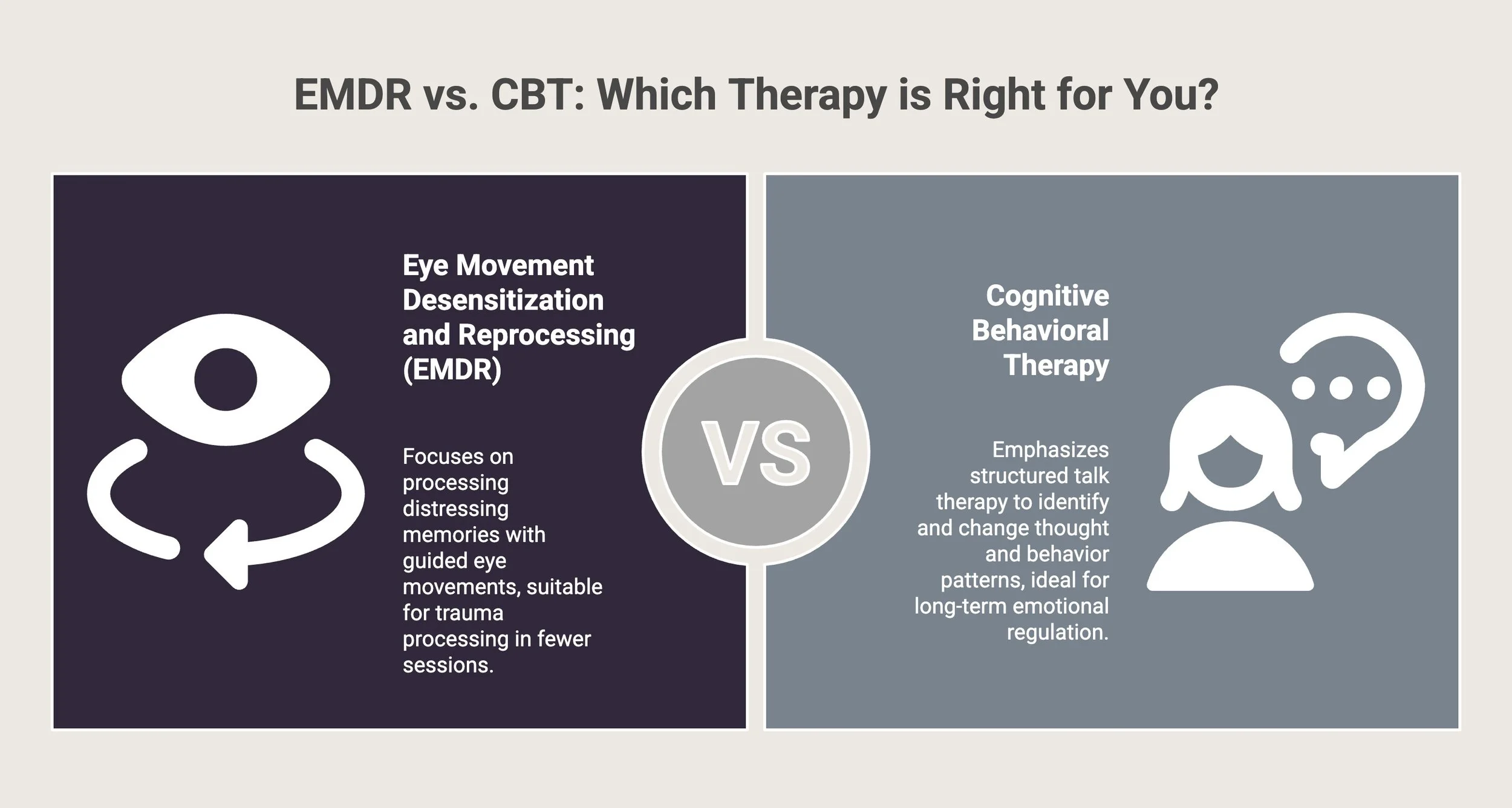
EMDR and CBT differ in how they address emotional distress, structure, and focus. EMDR uses guided eye movements with less discussion, while CBT relies on structured talk therapy that focuses on thoughts and behaviors.
Focus of Treatment
EMDR focuses on processing distressing memories that continue to trigger emotional or physical reactions. The goal is to help the brain reprocess these experiences so they no longer create the same level of distress.
CBT focuses on identifying patterns in thoughts and behaviors that contribute to anxiety or emotional difficulty. Therapy works on developing practical strategies to respond to situations in healthier ways.
Structure of Sessions
EMDR follows a structured eight-phase process designed to safely process specific memories. Sessions involve brief attention to a memory while the therapist guides bilateral stimulation, such as eye movements or tapping.
CBT sessions are typically structured around discussion, skill-building, and reviewing progress. Therapists may introduce different techniques depending on the client’s goals and the challenges being addressed.
Amount of Talking in Therapy
EMDR generally involves less detailed discussion about past experiences. The client briefly identifies a memory and then focuses on internal reactions while the therapist guides the processing.
CBT is considered a talk-based therapy. Much of the work involves discussing thoughts, emotions, and behaviors and exploring how they influence one another.
Between Sessions
EMDR usually involves minimal homework. Clients may be asked to notice emotional reactions or triggers between sessions.
CBT often includes exercises to practice between appointments, such as thought records, journaling, or behavioral exercises that reinforce skills learned in therapy.
Length of Treatment
EMDR treatment length varies depending on the person and the experiences being addressed, but targeted trauma can sometimes be processed in a shorter number of sessions.
CBT may continue for a longer period because the focus includes learning and practicing skills that support long-term emotional regulation.
Benefits of EMDR vs CBT

EMDR and CBT offer different benefits depending on how emotional distress develops. EMDR focuses on processing distressing memories, while CBT focuses on changing unhelpful thoughts and behavior patterns.
EMDR may be helpful for people who:
Have distress connected to specific past experiences
Experience strong emotional or physical reactions linked to memories
Prefer less verbal discussion during therapy
Want to focus on processing distressing memories
CBT may be helpful for people who:
Want practical strategies for managing thoughts and behaviors
Experience ongoing anxiety, worry, or negative thinking patterns
Benefit from structured exercises and skill-building
Feel comfortable with discussion-based therapy
A therapist can help determine which approach fits best. In some cases, treatment may include elements of both.
Can EMDR and CBT Be Combined?

EMDR and CBT can be used together in therapy, and many clinicians integrate both approaches when it supports the client’s needs. Each method addresses different parts of the healing process, which can make them complementary in treatment.
CBT is often used to help people develop coping strategies, such as managing anxious thoughts, building awareness of patterns, and learning grounding skills. EMDR can then focus on processing distressing memories that continue to trigger emotional or physical reactions.
When used together, these approaches can support both practical coping in daily life and deeper processing of past experiences.
EMDR vs CBT: Which Is Right for You?
EMDR may be the right choice if distress is strongly connected to specific past experiences, while CBT may be better suited for people who want practical strategies to change unhelpful thoughts and behaviors.
Therapists at CBT EMDR Therapy of Manhattan provide both EMDR and Cognitive Behavioral Therapy and help clients choose the approach that best fits their experiences and goals.
If you are considering therapy and want professional guidance, contact us today to speak with a therapist and begin care.
Frequently Asked Questions
What Is The Difference Between EMDR And CBT?
The difference between EMDR and CBT is how each therapy treats emotional distress. EMDR focuses on processing distressing memories, while CBT focuses on changing unhelpful thoughts and behavior patterns.
Is EMDR Or CBT Better For Anxiety?
CBT is more commonly used for anxiety because it teaches skills to change unhelpful thinking and behaviors. EMDR may help when anxiety is connected to distressing or traumatic memories.
Do You Have To Talk A Lot In EMDR Therapy?
No, EMDR usually requires less talking than traditional talk therapy. The client briefly identifies a memory while the therapist guides bilateral stimulation, such as eye movements or tapping.
How Long Does EMDR Or CBT Treatment Usually Last?
EMDR or CBT treatment length varies depending on symptoms and treatment goals. EMDR may require fewer sessions for specific memories, while CBT often involves multiple sessions to build coping skills.
Can EMDR And CBT Be Used In The Same Treatment Plan?
Yes, EMDR and CBT can be combined in the same treatment plan. CBT helps develop coping skills, while EMDR focuses on processing distressing memories.