
CBT for OCD Intrusive Thoughts Treatment Methods and Outcomes
Intrusive thoughts can take over without warning. One moment you’re fine, and the next you’re stuck with a thought that feels upsetting, wrong, or hard to let go of. Even when you recognize it doesn’t reflect who you are, it can pull you into anxiety and mental checking almost immediately.
That pattern is draining. Pushing the thought away, arguing with it, or trying to feel certain again often makes it louder. A lot of energy ends up going toward managing thoughts instead of being present in your life.
CBT for OCD intrusive thoughts takes a different approach. Rather than trying to stop thoughts from appearing, it focuses on changing how you respond when they do.
Using a structured, gradual process, this approach helps interrupt the fear-compulsion loop so intrusive thoughts lose their grip.
This article explains how CBT for OCD intrusive thoughts works and how it can support steadier, more manageable days.
What Are OCD Intrusive Thoughts?

OCD intrusive thoughts are unwanted thoughts, images, or urges that suddenly enter the mind and cause distress. They often feel alarming, wrong, or out of character. What makes them part of OCD is not the thought itself, but the fear that follows and the urge to do something to feel safe again.
These thoughts do not reflect who you are or what you want to do. The brain treats them as a threat, which creates anxiety and pushes you toward behaviors meant to reduce that fear.
Common OCD intrusive thoughts examples include:
Harm thoughts, such as worrying you might hurt someone you love, even though you never want to
Contamination fears, like believing everyday objects are dangerous or dirty
Sexual thoughts that feel shocking, unwanted, or deeply uncomfortable
Doubt-based thoughts, such as repeatedly questioning whether you locked a door or made a mistake
For example, a parent may suddenly think, “What if I hurt my child?” The thought feels terrifying and urgent. Anxiety rises, and they may pull away, check themselves, or seek reassurance. The relief is brief, and the thought comes back.
CBT for OCD intrusive thoughts focuses on breaking this pattern by changing how you respond, not by trying to stop the thoughts.
Why CBT Changes Your Response

Cognitive Behavioral Therapy for OCD intrusive thoughts works by changing how you respond when a thought appears. The goal is not to argue with the thought, analyze it, or make it go away. Instead, CBT focuses on interrupting the pattern that gives the thought its power.
That pattern tends to follow the same steps. An intrusive thought shows up and anxiety increases. A response follows, such as checking, avoiding, mentally reviewing, or seeking reassurance. Relief comes briefly, and then the thought returns again.
Trying to push thoughts away often makes them feel stronger. Efforts to feel completely certain can keep attention locked on the thought and increase anxiety. CBT takes a different approach by helping you notice discomfort without reacting to it.
Through structured practice, CBT teaches you to pause instead of responding automatically. You learn to allow thoughts and uncertainty to be present without trying to fix them. As this response changes, anxiety becomes easier to tolerate and thoughts begin to lose their urgency.
CBT for OCD intrusive thoughts is collaborative and gradual. The pace is adjusted so each step feels challenging but manageable, helping you regain a sense of control over how you respond.
Step-by-Step CBT Journey
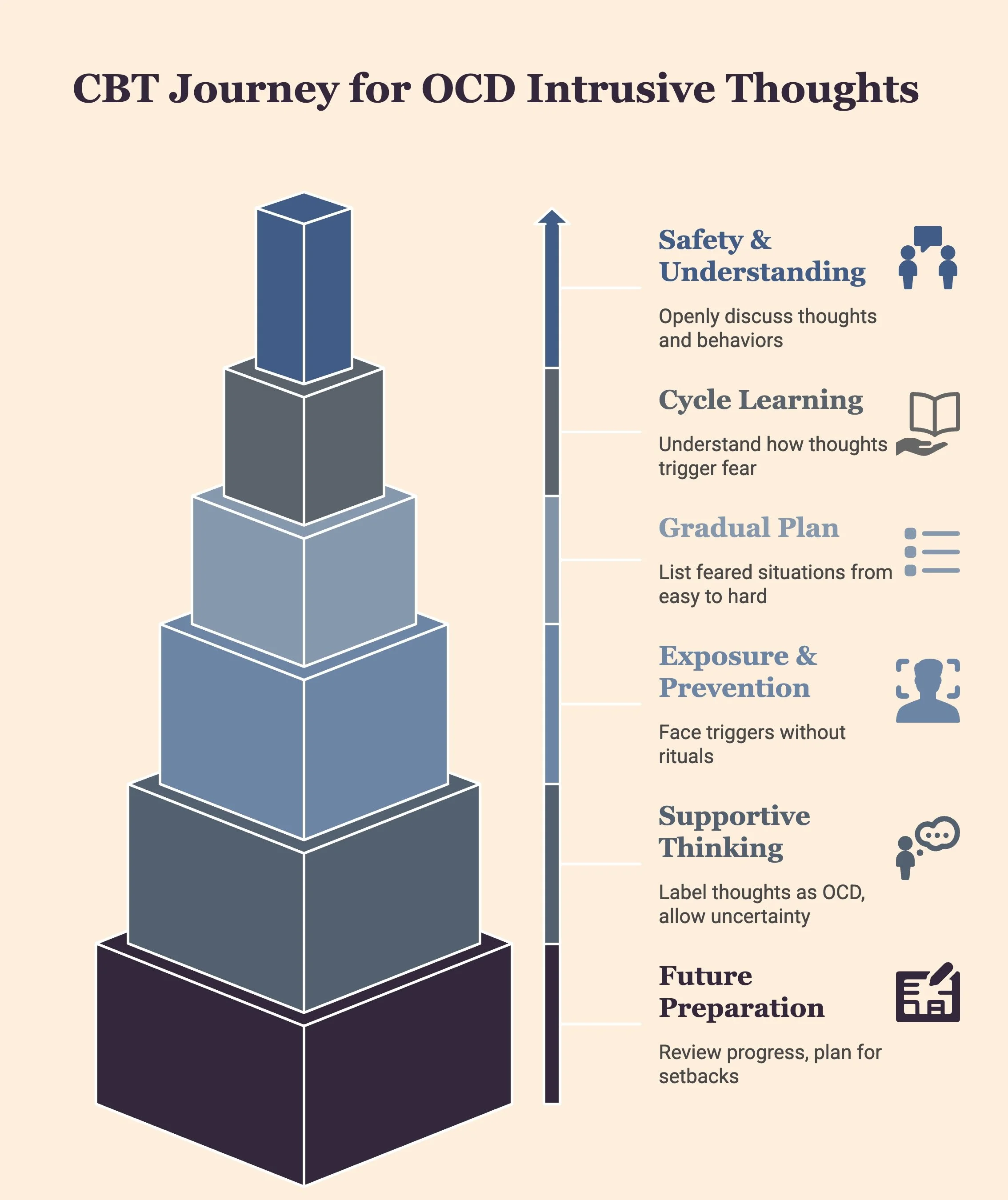
CBT for OCD intrusive thoughts is done gradually and with support. Each stage builds on the last, with pacing adjusted to what feels manageable.
1. Building Safety and Understanding
Early sessions focus on listening. You talk openly about your intrusive thoughts and the behaviors that follow. Together, you look for patterns, such as what triggers anxiety and what you do to feel relief. This helps create clarity and trust.
2. Learning How the Cycle Works
You learn how intrusive thoughts trigger fear and how compulsions bring short relief while keeping the cycle going. Understanding this pattern helps explain why thoughts feel powerful, even when you know they do not make sense.
3. Creating a Gradual Plan
You and your therapist list feared situations from less difficult to more difficult. For example, briefly touching something that feels contaminated may come before longer exposure. Starting with smaller steps keeps the process steady and doable.
4. Practicing Exposure and Response Prevention
You face a trigger without doing the usual ritual. For checking-related thoughts, this may mean leaving something unchecked for a short period. Anxiety rises and then settles without taking action. Sessions may include practice, with simple homework between visits.
5. Using Supportive Thinking Tools
You learn to label intrusive thoughts as part of OCD rather than facts. You also practice allowing uncertainty instead of trying to eliminate it. These tools support the exposure work rather than replace it.
6. Preparing for the Future
Later sessions focus on maintaining progress. You review what has helped, plan for setbacks, and build confidence using the skills on your own.
ERP in CBT for OCD

ERP is a core part of CBT for OCD intrusive thoughts. It combines exposure with response prevention in a structured and gradual way. The process is planned together so the steps fit your life and feel manageable.
ERP often begins with imagined exposure. This means allowing intrusive thoughts to be present without trying to fix, avoid, or neutralize them. As confidence grows, exposure may shift to real situations. For example, someone with harm-related thoughts may stay present during close contact instead of pulling away.
Response prevention is practiced alongside exposure. This means not performing the behaviors that usually follow anxiety, such as checking, avoiding, or seeking reassurance. Anxiety may rise at first, then settle without taking action.
The process is adjusted as needed. Steps can be slowed down, repeated, or modified to keep the work supportive. The goal is to help the brain learn that triggers do not require compulsions to stay safe.
ERP can feel uncomfortable, especially at the beginning. With guidance and practice, it helps shift responses from automatic and fear-driven to steadier and more intentional.
Supportive Practices That Work With CBT

CBT for OCD intrusive thoughts often works best when a few supportive practices are used alongside it. These supports do not replace CBT. They help make the process feel steadier and easier to stay with.
Mindfulness
Mindfulness is practiced by intentionally paying attention to what is happening in the moment, such as your thoughts, body sensations, or emotions, without trying to change them.
This might involve noticing a thought as it arises, naming it quietly, and returning your focus to something neutral like your breathing. The goal is not to make thoughts go away, but to practice letting them exist without engaging, reacting, or following them.
Self-Compassion
Intrusive thoughts often bring shame or harsh self-judgment. Self-compassion means responding with kindness rather than criticism.
Reminding yourself that these thoughts are part of OCD, not a reflection of who you are, can reduce emotional strain and help you stay grounded.
Family Support
Family support plays an important role in treatment. When loved ones understand how OCD works, they can encourage practice instead of unintentionally reinforcing compulsions. This often means resisting the urge to give reassurance and supporting efforts to face discomfort.
For teens, involving family helps create consistency at home, so progress continues outside of sessions.
Used together, these practices help CBT feel more supportive and less overwhelming.
Responding Differently to Intrusive Thoughts
CBT for OCD intrusive thoughts helps you respond differently when unwanted thoughts show up. Instead of trying to control or eliminate them, this approach builds skills for tolerating uncertainty and reducing the urge to react.
Progress happens through small, manageable steps taken at your pace. The focus is not perfection, but learning that discomfort can be handled without relying on compulsions.
If intrusive thoughts are taking up too much space in your life, support is available. Contact us today to take the next step with CBT.
Frequently Asked Questions
Can CBT stop OCD intrusive thoughts from happening?
CBT does not aim to stop intrusive thoughts from appearing. Instead, it helps you respond differently when they do. By reducing reactions like checking or reassurance, the thoughts lose urgency and impact. Many people find the thoughts feel less disruptive as a result.
How is CBT different from just trying to think positively?
CBT is not about replacing intrusive thoughts with positive ones. Trying to think positively can increase frustration. CBT focuses on noticing thoughts without reacting and changing behavior patterns that keep the cycle going, rather than debating or correcting the content of the thoughts.
Does CBT work for purely mental compulsions?
CBT addresses both visible behaviors and mental compulsions such as rumination, mental reviewing, or reassurance seeking. These internal habits can be just as reinforcing as physical rituals. CBT helps reduce them by changing how you respond to discomfort and uncertainty.
How long does CBT for OCD intrusive thoughts usually take?
The length of CBT varies depending on symptom severity and consistency of practice. Some people notice changes within weeks, while others need longer support. Progress is gradual and based on building skills over time rather than achieving quick relief.
Is CBT safe if intrusive thoughts feel very disturbing?
Yes. CBT is structured and paced carefully to avoid overwhelm. You are not forced to face anything suddenly. The process is collaborative, with adjustments made as needed. The goal is to build tolerance and confidence, not to increase distress or pressure.