
Can EMDR Be Done Virtually? (Yes, and Here’s How)
Virtual EMDR can be a realistic option for trauma treatment. The work stays the same, but the online format depends on privacy, emotional stability, technology, and therapist guidance.
That shifts the real question from can it be done to what kind of setup gives the work the best chance to help. If you’re considering virtual therapy across New York, that decision still needs to be made carefully.
Now let’s discuss how virtual EMDR works, when it tends to fit well, what can affect results, and how to tell if online or in-person care makes more sense for you.
How virtual EMDR works
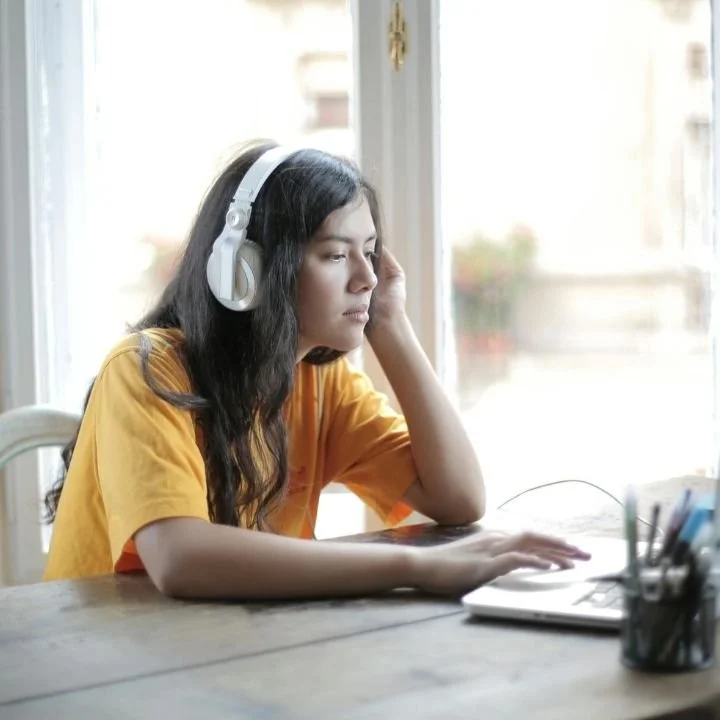
Virtual EMDR follows the same core treatment structure as in-person EMDR. You still work with a therapist to identify the memory being targeted, notice the thoughts, emotions, and body responses tied to it, and move through reprocessing in a structured way.
The main difference is how bilateral stimulation is delivered online. Instead of following a therapist’s hand in the room, the session may use screen-based eye movements, tapping, or audio cues.
Your therapist still guides the pace, checks how activated you feel, and helps you stay regulated enough to keep going. The format changes. The treatment process does not.
When virtual EMDR may be a good fit
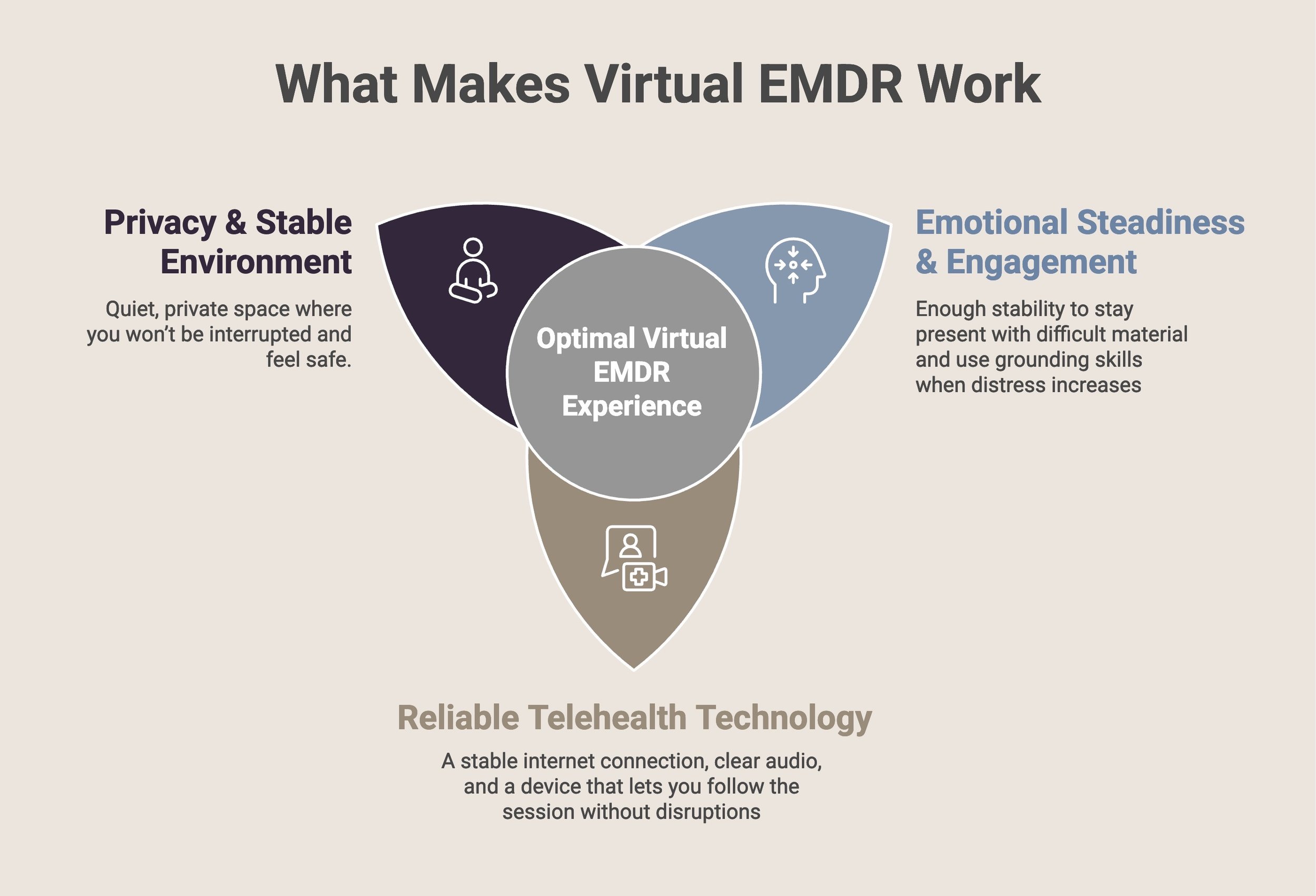
Virtual EMDR works best when three baseline conditions are in place: privacy, enough emotional steadiness to stay engaged, and technology that does not keep interrupting the session.
Privacy and a stable environment
A quiet, private space matters. If you’re worried about being overheard, interrupted, or pulled into something else right after the session, it gets harder to stay with the work.
In fact, a service evaluation found that clients and therapists viewed online EMDR as acceptable, safe, and effective. Trauma processing asks for focus, and the setting needs to support that.
Readiness for trauma-focused work
Virtual EMDR also works better when you can stay present during difficult material and use grounding tools as distress rises.
You don’t need to feel fully settled before starting, but the format should match your current capacity and the kind of trauma therapy you need.
What matters is having enough stability to stay engaged without feeling flooded.
Comfort with telehealth technology
The technology doesn’t need to be perfect, but it does need to work. A stable internet connection, clear audio, and a device that makes the session easy to follow can make a real difference.
When the technology keeps failing, your attention gets pulled away from the work itself.
What can shape progress once online EMDR begins

Once treatment starts, progress is shaped by what happens around the session as much as what happens in it. That includes the transition back into daily life, the consistency of your setup, and how well the therapist structures the work from one session to the next.
Transition time after sessions
Online EMDR tends to go better when you have time to settle before jumping back into the rest of the day. A short buffer, a quieter schedule, or a grounding routine can make the work easier to absorb.
If the session ends and you have to move straight into noise, work, or other demands, it can be harder to process what came up.
Consistency from session to session
A steady setup helps the process build over time. Using the same private space, the same device, and the same general routine can make sessions feel easier to enter and easier to recover from.
When the environment keeps changing, the work can feel less contained.
Therapist pacing and structure
Progress also depends on how well the therapist adapts EMDR to a remote format. The session should still feel clear, paced, and well held from start to finish.
Online delivery changes the setting, but it should not make the work feel loose, rushed, or improvised.
Decide if virtual EMDR is right for you
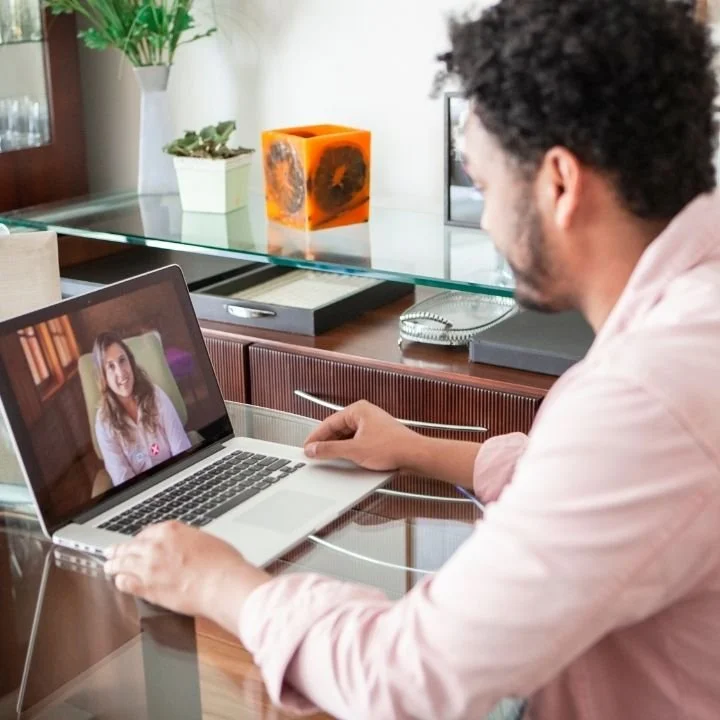
Choosing between virtual and in-person EMDR comes down to which setting will help you stay engaged during the session and settle afterward. The stronger option is the one that makes the work easier to hold from start to finish.
→ Yes: If you have privacy, a stable setup, and enough support before and after sessions, virtual EMDR may work well.
→ No: If interruptions, limited privacy, or post-session overwhelm are likely to get in the way, extra preparation, a slower pace, or in-person care may make more sense.
A clear decision matters because the setting can shape how focused the session feels and how manageable the rest of the day feels once it ends. That context can make the work easier to stay with over time.
Start virtual EMDR with a therapist who can guide the fit
A “yes” and a “no” can still lead to the same next step. That step is a clinical conversation about your trauma history, current symptoms, home setup, and the pace that would make the work feel manageable.
CBT EMDR Therapy of Manhattan offers evidence-based EMDR, CBT, and ERP in-person in Manhattan and virtually across New York. The right format is the one that supports the work and helps you stay with it over time.
If you want help sorting through that decision, schedule a free consultation.
FAQs
Can EMDR be done effectively online?
Yes. Virtual EMDR can be effective when the setup is private, the technology is stable, and the therapist structures the session well.
Who is a good fit for virtual EMDR?
A strong fit usually includes privacy, a stable internet connection, and enough emotional steadiness to stay engaged during trauma work.
What do you need for a virtual EMDR session?
You need a quiet, private space, a reliable device, clear audio, and internet that does not keep dropping out.
What can affect results in online EMDR?
Privacy, interruptions, internet problems, post-session support, and how well the therapist adapts the work to an online format.
How can a therapist tell if virtual EMDR is right for you?
That starts with assessment. A therapist looks at your trauma history, current symptoms, ability to stay grounded, and what kind of support you have around the session.