
How Many EMDR Sessions Are Needed to Feel Better?
The number of EMDR sessions it takes to feel better varies by person. EMDR often happens over 6 to 12 sessions, but that range is only a starting point. Relief can show up sooner, while more complex trauma often takes longer.
With EMDR therapy, the pace depends on your trauma history, treatment goals, how many target memories need attention, and how much preparation the work requires.
That can feel frustrating when you want a clearer answer. Below, you’ll see what shapes session count, why the process can stretch across multiple appointments, and what early progress can look like.
What affects how many EMDR sessions you may need
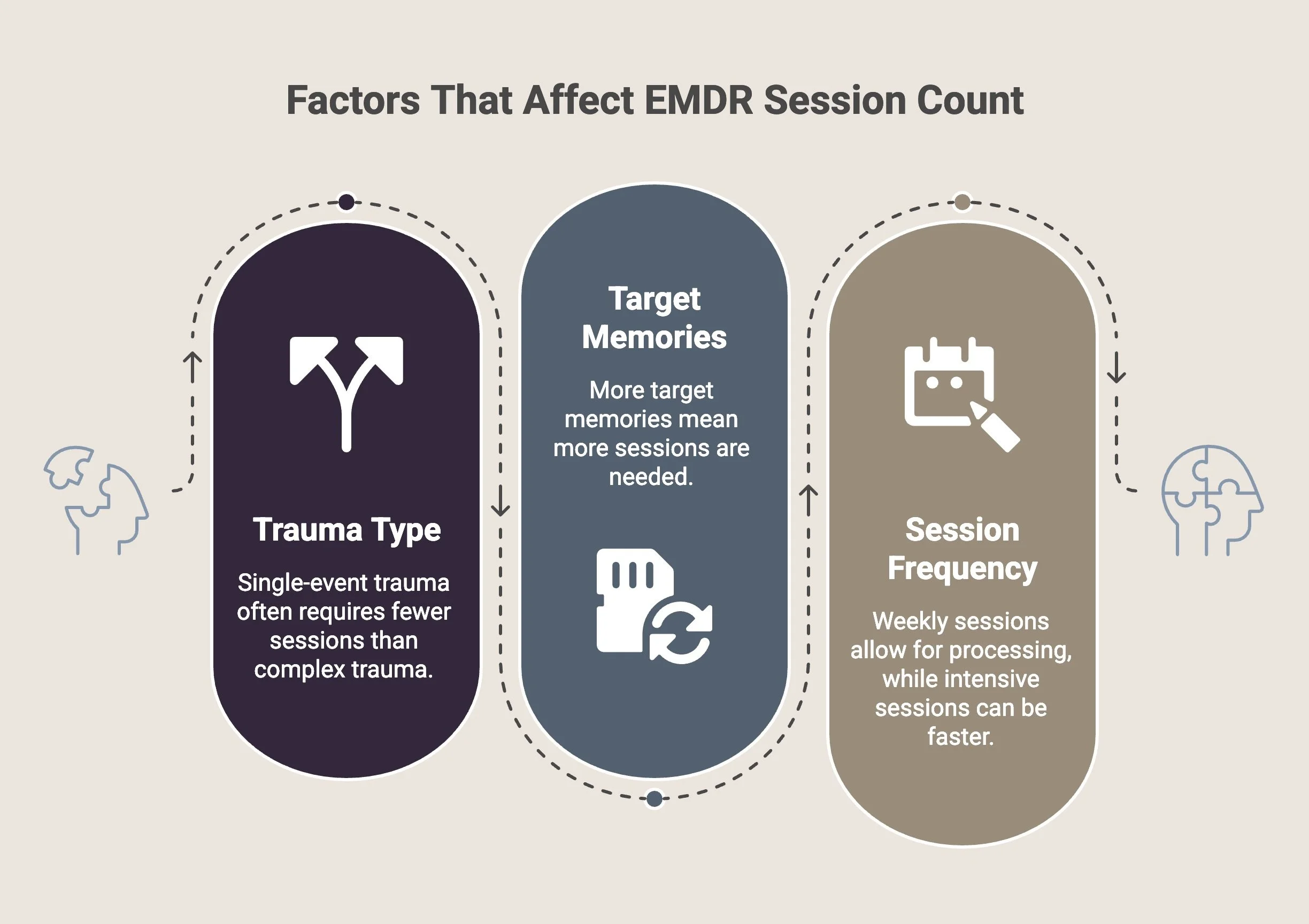
Session count usually depends on three factors: the kind of trauma you’re working through, the number of target memories in treatment, and how often sessions happen.
Single-event vs. complex trauma
A single disturbing event often gives treatment a clearer starting point. There may be one main memory, one trigger pattern, and one set of beliefs that needs attention. That’s one reason single-event trauma can sometimes be processed in about 3 to 6 sessions.
Complex trauma takes longer. The work may involve repeated experiences, several target memories, and a nervous system that needs more preparation before deeper processing begins. Longer-term trauma often takes 8 to 12 sessions, and sometimes beyond that.
Number of targets and treatment goals
Session count also depends on what you want help with. One target memory is different from a broader goal like easing panic, improving sleep, reducing shame, or feeling less reactive in relationships.
As treatment needs to cover more ground, the timeline can expand. That reflects the scope of the work, not a problem with the process.
Weekly vs. intensive EMDR scheduling
Frequency matters too. Weekly EMDR gives people time to process between sessions and notice what is shifting in daily life. Intensive EMDR can move faster, but only when the fit is right.
The stronger question is whether the schedule supports steady progress without overwhelming your system.
Why EMDR can take more than a few sessions

Part of the answer to how many EMDR sessions are needed comes down to how EMDR is structured. It moves through eight phases across multiple appointments, and the early stages can take several sessions before deeper processing begins.
History-taking and treatment planning
Early sessions focus on what still feels active, how current symptoms connect to the memories behind them, and where treatment should begin. That groundwork gives the work a clear direction from the start.
When there’s a lot to untangle, this stage can take longer. A focused plan has to be in place before deeper processing starts.
Preparation and resourcing
Before trauma processing begins, your therapist may help you strengthen grounding skills, identify what helps you stay steady, and practice ways to manage distress between sessions. That preparation matters because EMDR works best when your system can stay engaged without becoming overwhelmed.
For one person, this stage may move quickly. For another, it may take longer. That pace can make sense within a longer trauma therapy process.
Reprocessing and follow-up phases
Reprocessing is often the part people picture first, but it’s only one part of EMDR. Treatment also includes checking how the memory feels, strengthening adaptive beliefs, noticing what comes up in the body, and reviewing what has shifted since the last session.
That structure helps explain why the work can stretch across multiple appointments. The goal is to reduce emotional charge and make the memory less disruptive in daily life.
Signs EMDR is starting to work

Progress in EMDR often shows up in changes that research can measure. A meta-analysis of randomized controlled trials found that EMDR led to significant improvements in PTSD symptoms, depression, anxiety, and overall distress in PTSD patients.
PTSD symptoms start easing
Depression begins lifting
Anxiety starts coming down
Overall distress feels less intense
These shifts may not all show up at the same time. Even one clear change can be a meaningful sign that the work is starting to help.
Find out how many EMDR sessions you may actually need
If you’re still wondering how many EMDR sessions you may need, the next step isn’t guessing. It’s looking at your trauma history, current symptoms, treatment goals, and how much preparation the work may require.
That’s where a personalized plan matters. EMDR can move quickly in one case and take longer in another. The difference often comes down to what the treatment needs to address and how the work needs to be paced.
CBT EMDR Therapy of Manhattan offers EMDR in person in Midtown Manhattan and virtually across New York. If you want a clearer sense of what treatment could look like for you, schedule a free consultation.
FAQs
How many EMDR sessions do most people need?
A common starting range is 6 to 12 sessions, but that number can shift based on trauma complexity, treatment targets, and how much preparation is needed first.
What can make EMDR take more or fewer sessions?
Timeline usually depends on trauma type, the number of memories being targeted, and session frequency. A single-event trauma may move faster, while longer-term trauma often needs a slower pace and more groundwork.
Can EMDR work in just a few sessions?
It can. A single disturbing event may sometimes be processed in about 3 to 6 sessions, especially when the target is focused and there is less layered trauma to address.
How do you know if EMDR is starting to work?
Progress often shows up in measurable shifts. The memory may feel less charged, triggers may feel less disruptive, and distress may start easing between sessions.
How can a therapist tell if EMDR is the right fit for you?
That starts with assessment. A therapist looks at your trauma history, current symptoms, stability, treatment goals, and readiness for trauma processing.