
Does Trauma Cause Memory Loss?
Does trauma cause memory loss? Trauma can affect how memories are stored and recalled. Memory gaps, fragmented recollections, and difficulty concentrating are all experiences that can occur after overwhelming stress.
That does not necessarily mean a memory has disappeared. Trauma can change how experiences are processed, which may make certain details harder to access later.
If you've noticed changes in your memory after a distressing experience, here are reasons this can happen and treatment options that may help.
How trauma can affect memory

Trauma can change how experiences are processed and recalled. This can lead to memory gaps, fragmented recollections, flashbacks, or difficulty accessing certain details.
Emotional trauma and memory loss can be connected
Emotional trauma can leave certain experiences feeling difficult to remember. Details may feel incomplete, distant, or harder to access because overwhelming events are not always remembered in the same way as everyday experiences.
Stress can disrupt how memories are stored and recalled
Stress affects more than emotions. Research has found that stress can interfere with how the brain processes information, making concentration, memory, and recall more difficult when the nervous system remains activated for long periods.
Trauma can make memories feel fragmented or unclear
Traumatic experiences are not always remembered as a clear sequence of events. Certain moments may stand out vividly while other details feel incomplete, disconnected, or difficult to place within a timeline.
PTSD can affect focus, recall, and working memory
PTSD can make it harder to stay mentally present. Intrusive memories, hypervigilance, and ongoing stress can pull attention away from what is happening in the moment, making concentration and recall feel more difficult.
What memory loss due to trauma can look like
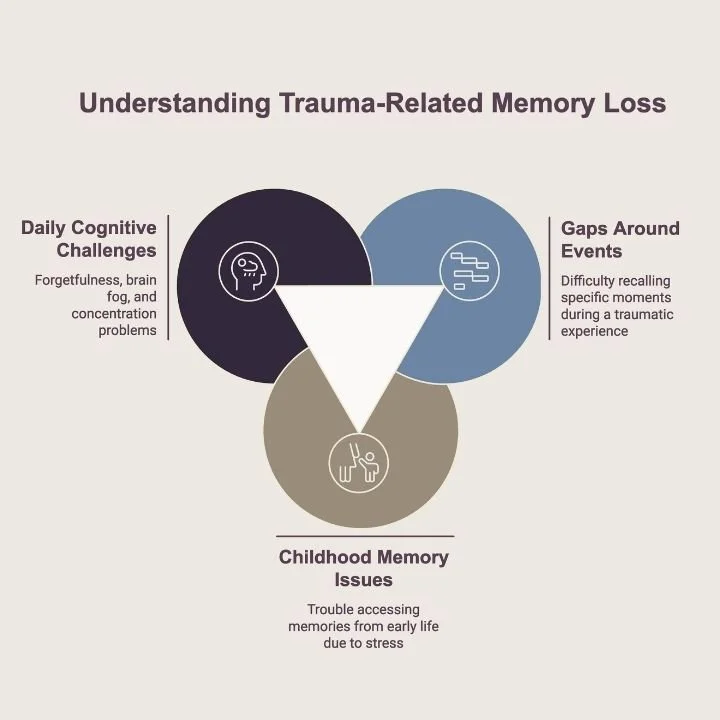
Memory difficulties can show up in different ways. You may notice gaps surrounding a difficult experience, trouble recalling earlier periods of life, or challenges staying focused throughout the day.
Gaps around a specific traumatic event
You may remember what happened before or after a difficult experience but struggle to recall certain moments in between. This pattern can occur when the brain prioritizes responding to danger over recording a detailed account of what is happening.
Trouble recalling parts of childhood or past experiences
Long periods of life may feel blurry or harder to access than expected. Research has linked childhood neglect, maltreatment, and persistent stress to changes in cognitive development that may contribute to memory difficulties later in life.
Forgetfulness, brain fog, or difficulty concentrating
Daily tasks may require more effort than they once did. Losing track of conversations, forgetting appointments, struggling to focus, or feeling mentally foggy are all common challenges when stress continues to affect cognitive functioning.
Can trauma-related memory loss improve?

Trauma-related memory loss can improve with appropriate treatment and support.
The effects of trauma are not always permanent, and the brain remains capable of adapting as symptoms are addressed. Improvements in recall, concentration, and daily functioning are possible when distress becomes less disruptive.
Evidence-based approaches such as Cognitive Behavioral Therapy (CBT) and Eye Movement Desensitization and Reprocessing (EMDR) can help address unresolved trauma. CBT focuses on unhelpful patterns of thinking, while EMDR helps difficult memories feel less overwhelming.
As a greater sense of safety and stability returns, memory and concentration often become easier to manage.
Start trauma therapy with support that fits what you need
Memory difficulties after trauma can feel confusing, but they do not have to be faced alone. If gaps in recall, concentration problems, or lingering effects of trauma are affecting your daily life, support is available.
CBT EMDR Therapy Associates provides evidence-based treatment to help clients understand these symptoms, address unresolved trauma, and move forward with greater confidence.
Schedule your free consultation to learn how trauma-focused therapy can help.
Frequently asked questions
Can stress and trauma cause memory loss?
Chronic stress and trauma can affect attention, recall, and memory formation. Memory difficulties may appear as concentration problems, forgetfulness, or trouble remembering details that once felt easy to access.
What is memory loss due to trauma called?
Memory loss related to trauma is often referred to as dissociative amnesia when important personal information becomes difficult to recall. PTSD and chronic stress can also contribute to memory-related difficulties.
Why do I have memory gaps after trauma?
Memory gaps can occur when an experience feels overwhelming. During intense stress, the brain may focus on immediate survival, making certain details harder to process, store, or recall later.
How long does trauma-related memory loss last?
There is no single timeline. Symptoms may last weeks, months, or longer, depending on the trauma, stress levels, and treatment. Improvements often occur as trauma symptoms become less disruptive.
When should I talk to a therapist about trauma and memory loss?
Consider speaking with a therapist if memory problems are affecting daily life, relationships, work, or well-being. Professional support can help identify underlying causes and appropriate treatment options.