
7 Signs Therapy Is Working and Helping You Make Progress
How do you know if therapy is working? It is a common question, especially when progress feels slower or less noticeable than expected.
The short answer is that therapy progress is usually reflected in everyday life. You may notice patterns sooner, recover from difficult emotions more quickly, communicate more effectively, or feel better equipped to handle situations that once felt overwhelming.
Let's take a look at seven common signs that therapy may be helping.
What therapy progress can look like day to day
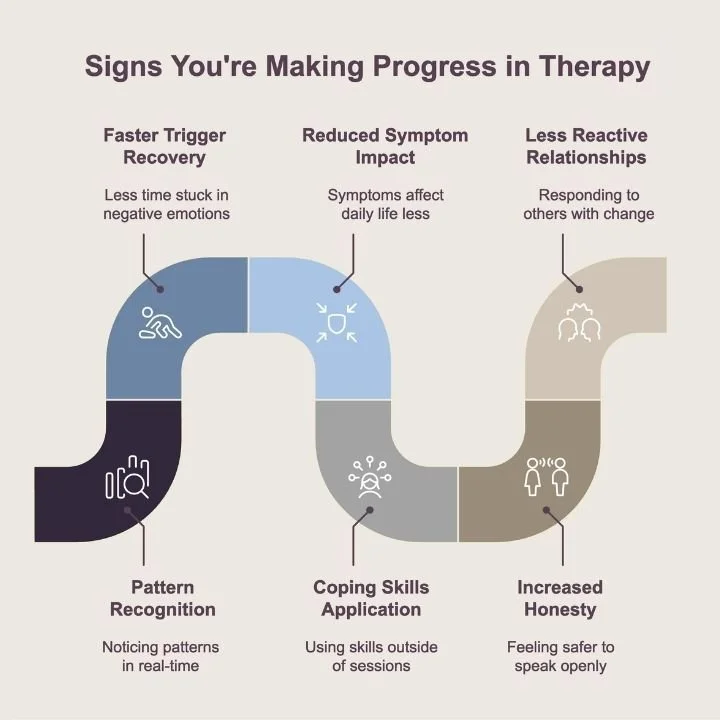
Therapy progress appears in small, everyday moments. You may respond differently to stress, recover more quickly from setbacks, or notice patterns that once went unnoticed.
1. You notice your patterns sooner
You may start catching patterns earlier than you used to. Instead of realizing what happened after an argument, anxious spiral, or difficult situation, you notice it while it is happening. That awareness creates more opportunities to respond differently.
2. You recover from triggers faster
Feeling triggered does not mean therapy is not working. A common sign of progress is spending less time stuck in anxiety, anger, shame, or fear. One study found that learning to engage with difficult emotions is an important part of the therapeutic process. The trigger may still appear, but recovery can feel quicker and more manageable.
3. Your symptoms interrupt daily life less
Symptoms may still show up, but they do not affect your life in the same way. Anxiety may no longer stop you from leaving the house. Difficult thoughts may pass more quickly. Situations that once felt overwhelming may feel easier to navigate, even when symptoms are still present.
4. You use coping skills outside of sessions
Therapy does not stop when a session ends. A sign of progress is applying what you discuss in therapy to real situations. You may pause before reacting, challenge an unhelpful thought, use a coping strategy when stress begins to build, or manage intrusive thoughts more effectively before they take over your attention.
5. You feel safer being honest in therapy
Therapy tends to be more effective when you can speak openly about what is really happening. Feeling comfortable enough to discuss difficult emotions, setbacks, or uncomfortable topics can be a meaningful sign of progress.
6. Your relationships feel less reactive
The way you respond to others may begin to change. You may find it easier to communicate your needs, set boundaries, or step away from familiar conflicts. Conversations that once felt overwhelming may become easier to navigate.
7. Your goals shift from relief to growth
People begin therapy looking for relief from distress. As progress develops, conversations often expand beyond symptom management. Attention may shift toward confidence, relationships, self-understanding, and building a life that feels more fulfilling.
How do you know if therapy is helping when progress feels slow?

Progress is not always measured by feeling better right away. Changes in self-awareness, coping skills, relationships, and symptom severity can all indicate that therapy is helping, even when the improvement feels gradual.
You may notice patterns sooner, recover from triggers more quickly, or respond differently to stressful situations. These shifts often become noticeable with time.
Therapy is not always a straight line. Difficult sessions and temporary setbacks can happen, especially when working through long-standing challenges.
Looking at changes over several months provides a clearer picture of progress than focusing on a single session or week.
When therapy may not be helping

It may be worth having a conversation with your therapist if sessions consistently feel disconnected from your goals or if you do not feel understood. Research shows that a strong therapeutic relationship and shared treatment goals are important parts of effective therapy.
Revisiting your goals can also be helpful. As life changes, therapy goals often change too. Taking time to review what has improved and what still feels difficult can provide a useful perspective.
Sometimes progress requires adjustments to the treatment approach, the frequency of sessions, or the therapeutic relationship itself.
Choose therapy that helps you track meaningful progress
Progress is not always easy to see while it is happening. Small changes in how you handle stress, relationships, and daily challenges can be meaningful signs that therapy is helping.
CBT EMDR Therapy Associates helps clients recognize those changes, track progress toward their goals, and continue building on them.
Schedule your free consultation to know how therapy can support meaningful and lasting change.
Frequently asked questions
How long does it take to know if therapy is helping?
People notice small changes within the first few months. The timeline depends on your goals, symptoms, and treatment approach, but progress is usually measured through consistent shifts in daily life.
Is it normal to feel worse after therapy?
Yes, difficult emotions can surface after therapy sessions. Discussing painful experiences may temporarily increase discomfort, but ongoing overwhelm, distress, or feeling unsupported should be discussed with your therapist.
What should I do if therapy is not helping?
Start by talking openly with your therapist. Reviewing goals, discussing concerns, or adjusting the treatment approach can sometimes improve progress and help sessions feel more relevant and effective.
What are red flags in therapy?
Consistently feeling dismissed, judged, pressured, or unable to speak openly can be concerning. A strong therapeutic relationship should support trust, collaboration, and respect throughout the treatment process.
How often should I go to therapy to make progress?
Weekly sessions are common because they provide consistency and momentum. Frequency depends on your needs, goals, symptoms, and treatment plan, so the right schedule can vary between individuals.