
When you’re weighing EMDR vs talk therapy for trauma, look at how each approach works with the memory. In EMDR, you focus on a selected memory while following guided eye movements, taps, or sounds. Other trauma therapies may use structured discussion, writing, or gradual exposure.
EMDR is itself a form of psychotherapy. The differences become clearer when you compare it with a specific type of talk therapy.
Knowing what trauma therapy asks of you during and between appointments can help you decide what fits.
How EMDR and talk therapy approach trauma differently

In eye movement desensitization and reprocessing (EMDR), the therapist uses side-to-side eye movements, alternating taps, or alternating sounds. This is called bilateral stimulation.
Cognitive processing therapy (CPT) and prolonged exposure (PE) are two structured forms of trauma-focused talk therapy. Other approaches, such as supportive therapy, may focus on current difficulties in your daily life.
The VA/DoD clinical practice guideline strongly recommends CPT, EMDR, and PE for post-traumatic stress disorder (PTSD). All three are options to discuss with your therapist.
How the two approaches differ in practice
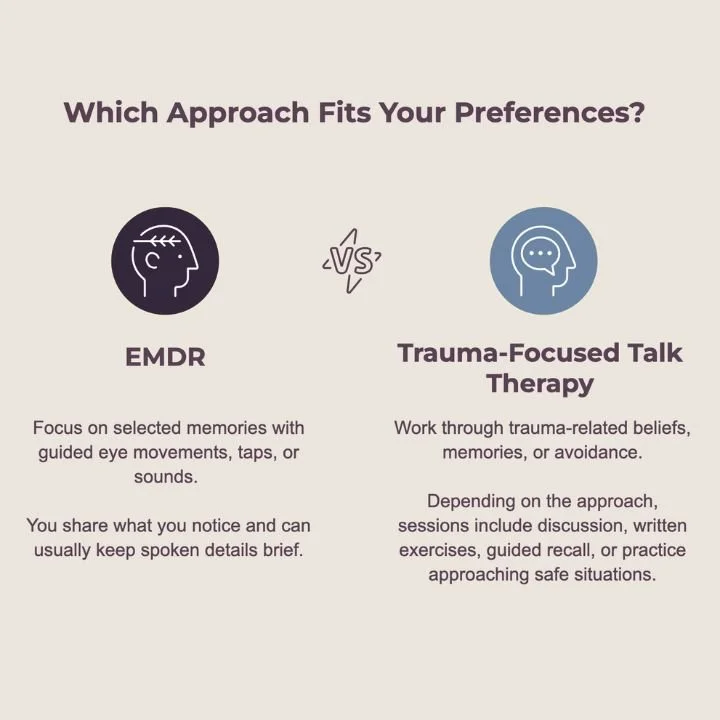
Questions about EMDR vs traditional talk therapy often come down to what happens during and between appointments.
1. How traumatic memories are processed
During EMDR reprocessing, you bring a selected memory to mind in short sets. Between sets, you tell the therapist what you notice, such as a thought, an emotion, or a physical sensation.
CPT examines the beliefs that formed after the event and tests them against what you know now. PE combines guided recall of the memory with gradual practice in safe situations you’ve been avoiding.
2. How much you need to talk about the trauma
In EMDR, you’ll identify the memory and let your therapist know what you notice. You can usually keep the details brief.
Prolonged exposure involves recounting the event in session and typically listening to a recording of that recall between appointments. In cognitive processing therapy, you can work on trauma-related beliefs and complete written exercises with or without writing a detailed account of what happened.
3. How sessions are structured
EMDR follows eight phases, beginning with history taking, preparation, and assessment before memory reprocessing. In CPT, sessions often involve reviewing written exercises and practicing how to question beliefs. A common starting plan is 12 sessions, and the number can change with your needs. PE sessions include guided recall and a review of between-session practice, usually over 8 to 15 appointments.
4. How treatment pace and intensity can differ
EMDR, CPT, and PE can all bring up strong emotions. Pace can depend on session length, between-session practice, and how many memories you’re working on. Ask what your clinician will do if distress becomes hard to manage during or between appointments.
5. What each approach targets
In EMDR, a sign of progress may be that a memory feels less distressing. In CPT, it may be that an upsetting belief, such as “It was my fault,” feels less convincing. In PE, it may be that you can return to a safe activity you’ve been avoiding.
6. How preparation works before trauma processing
In EMDR, your therapist explains the process and helps you practice ways to manage distress, such as grounding. How much preparation you need can vary.
PE begins with education about PTSD and the treatment, so you know what each part is for before you approach a memory. Your therapist also helps you plan which avoided situations to practice approaching.
7. When each approach may be a better fit
EMDR may suit you if you prefer memory-focused work with less detailed description. CPT may fit if you want to examine upsetting beliefs through discussion and writing. PE may fit if you’re ready to approach safe situations you’ve been avoiding.
Ask about your clinician’s training and experience with the approach you’re considering.
Can EMDR and talk therapy be used together?

Yes. EMDR can be your primary trauma treatment or part of a broader care plan. For example, you might talk through a current relationship difficulty in supportive sessions while EMDR focuses on selected memories. Ask how those parts of care fit together and how you’ll track progress.
If you’re seeing separate therapists, ask how they’ll coordinate with your permission, who’ll lead the trauma treatment, and whom to contact if you need support between appointments.
How to choose EMDR or talk therapy for trauma

Choose based on your symptoms, your preferences, the evidence for each method, and your clinician’s training. Ask why the recommended approach fits the concerns you want to address.
Think about how much detail you want to share, how you feel about written exercises, and how much time you have to practice between appointments. Bring those preferences to your assessment.
If your clinician suggests cognitive behavioral therapy (CBT), ask which type they recommend and what the exercises would involve.
If they suggest EMDR, ask how you’ll prepare, how you’ll choose which memory to work on, and when you’ll review progress.
Compare trauma therapy options in Manhattan
CBT / EMDR Therapy of Manhattan offers trauma treatment in person in Manhattan and online across New York. Call (917) 935-4040 or schedule your free consultation to discuss which approach might fit your needs.
FAQs about EMDR vs talk therapy
What are the limitations of EMDR?
EMDR has the strongest research support for PTSD. Working with distressing memories can be uncomfortable, and your therapist may suggest extra preparation or addressing an immediate safety concern first.
What types of trauma can EMDR help with?
EMDR can help treat PTSD after different experiences, such as assault, serious accidents, or combat. Your therapist will ask how your experience affects you now and whether memory-focused treatment fits your needs.
Why can EMDR feel intense?
Focusing on a distressing memory can bring up strong emotions, physical sensations, or related thoughts. Tell your therapist if you feel overwhelmed, disconnected, or persistently worse. They can check how you’re doing and adjust the plan.
How many EMDR sessions does treatment take?
For adults with PTSD, the VA describes a typical EMDR course as about three months of weekly sessions. That’s a starting point. The timeline can change based on how much preparation you need, which memories you’re working on, and how you respond.
What should you expect after an EMDR session?
You might feel tired after a session, notice emotions or memories coming up, or see little change right away. Follow the plan you agreed on with your therapist. Contact them if distress persists, symptoms worsen, or everyday tasks become harder.