
How trauma affects the body varies from person to person. You might have trouble settling after stress, startle easily, carry muscle tension, or notice changes in digestion or sleep. Research on post-traumatic stress disorder (PTSD) has also found differences in stress hormone levels and markers of inflammation.
Physical reactions can start before you recognize what set them off. Tracking when they begin, how long they last, and what they interrupt gives your doctor or therapist clearer information.
Trauma therapy can address the link between distressing experiences and current reactions. A medical assessment can help check for other causes of physical symptoms.
Why trauma can keep the body in survival mode
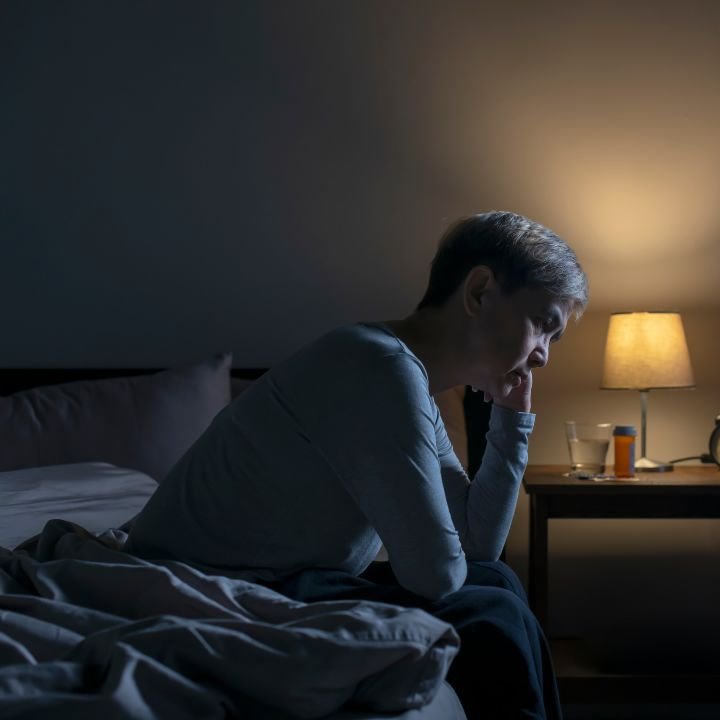
After danger has passed, reminders can still trigger the body’s alarm response. You might feel tense, easily startled, or ready to escape even when you’re safe. People often call that lingering sense of being on guard “survival mode.”
Physical effects of trauma that can persist
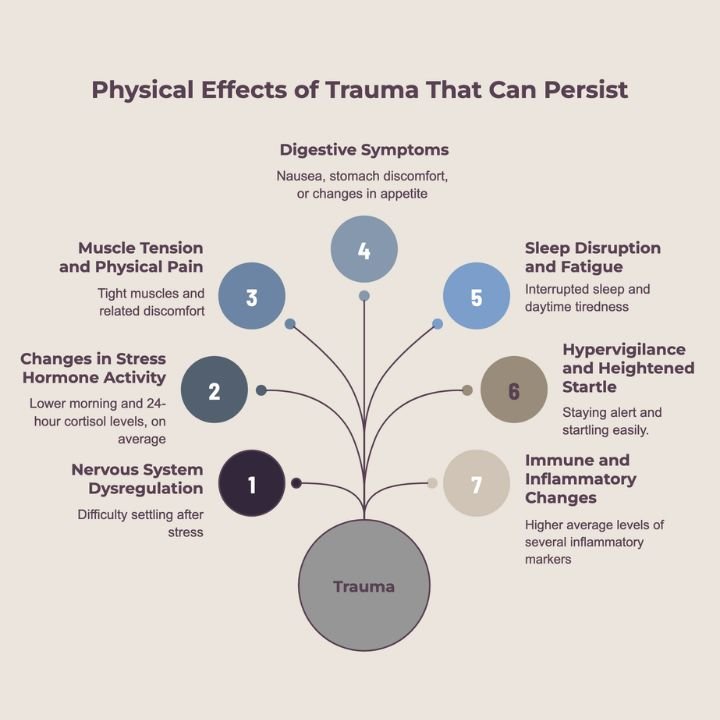
Some of these changes are reactions you may notice after trauma, while others show up in studies of people with PTSD.
1. Nervous system dysregulation
Dysregulation can make it harder to settle after stress. For example, your heart might still be racing after a difficult conversation ends, even when you want to get back to what you were doing.
2. Changes in stress hormone activity
Stress hormones help the body respond to danger. A 2019 meta-analysis found lower morning and 24-hour cortisol levels, on average, in adults with PTSD. Results varied across measures. A single hormone result can’t tell you whether symptoms are trauma-related.
3. Muscle tension and physical pain
Bracing for danger can tighten the muscles in your jaw, shoulders, and back before you notice it. Tension can contribute to headaches or make existing pain harder to manage. Pain can then disrupt sleep and activity, which can make it harder to relax.
4. Digestive symptoms
Stress can affect digestion and contribute to nausea, stomach discomfort, or changes in appetite or bowel habits. If symptoms keep coming back, noting when they happen alongside meals and medications can help a medical provider look for causes.
5. Sleep disruption and fatigue
Nightmares and waking during the night can interrupt rest, and tiredness can make stress harder to handle the next day. A 2021 review of sleep in PTSD estimated that about 50% to 70% of people with PTSD experience recurring distressing nightmares. A medical provider can check ongoing sleep problems for other causes, such as sleep apnea.
6. Hypervigilance and heightened startle responses
Hypervigilance means staying on alert for possible danger. You might find yourself scanning exits or watching the door even in familiar places. A heightened startle response is the physical jolt you might feel when a sound or movement catches you by surprise.
7. Changes in immune and inflammatory responses
Inflammation is part of the immune system’s response to injury or infection. A 2022 meta-analysis found higher average levels of several inflammatory markers in people with PTSD compared with healthy participants. These were group averages, and inflammation can have many causes.
How trauma affects the brain and body together

When the brain detects possible danger, it signals the body to act. Your heart rate may rise, your breathing may speed up, and your muscles may tighten.
The amygdala helps detect potential threats and works with other brain regions to coordinate the response. A 2023 review of 83 brain-imaging studies found that adults with a history of severe adversity showed greater activity in the amygdala and lower activity in some parts of the prefrontal cortex during tasks. These are patterns across groups.
For example, a sound linked to an accident could make your breathing quicken before you recognize its source. As your attention shifts to possible danger, following a conversation or finishing a task can become harder.
Signs of emotional trauma in adults

After trauma, you might have intrusive memories, avoid reminders, feel irritable or emotionally numb, blame yourself, or have trouble feeling safe. A mental health professional can help you understand whether those reactions fit PTSD or another concern.
Your therapist will ask when these reactions happen and what they keep you from doing. Skipping necessary travel or pulling away from relationships can show how much the reactions affect daily life.
What can help regulate the body after trauma?

Grounding, regular sleep and meals, and physical activity that fits your needs can help you manage stress reactions. Grounding means bringing your attention to your surroundings, such as noticing objects in the room or feeling the floor beneath your feet.
Cognitive behavioral therapy (CBT) can help you work on thoughts and behaviors that keep distress going. Eye movement desensitization and reprocessing (EMDR) uses a structured process involving selected memories and guided eye movements, taps, or sounds. An assessment helps you and your clinician choose an approach.
Ask a medical provider about new, persistent, or worsening physical symptoms. Seek emergency care for symptoms such as severe chest pain, trouble breathing, or fainting.
Begin trauma treatment in Manhattan and across New York
If tension, disrupted sleep, or strong reactions to reminders are interfering with your day, you can bring those concerns to your first appointment.
CBT / EMDR Therapy of Manhattan offers trauma treatment in person in Manhattan and online across New York. Call (917) 935-4040 or schedule your free consultation.
FAQs about how trauma affects the body
Can trauma cause physical symptoms years later?
Yes. Trauma-related physical reactions can persist or recur years later, especially around reminders. If a physical symptom is new, ask a medical provider to help find the cause.
Can childhood trauma affect your physical health as an adult?
Yes. A 2021 systematic review linked childhood adversity to a higher risk of some chronic health conditions in adulthood. Stress, sleep, health habits, and living conditions can all contribute. The findings describe risk across groups, and individual outcomes vary.
What happens when trauma goes untreated?
Symptoms can ease with time, but ongoing reactions can disrupt sleep, relationships, work, and health routines. An assessment can help if distress continues or interferes with daily life.
Can trauma symptoms come and go?
Yes. Symptoms can shift with reminders, stress, sleep, and changes in your circumstances. You can have a hard stretch and still be making progress. Noticing what changed can help you and your clinician decide whether to adjust your plan.
What are physical signs that trauma recovery is progressing?
Possible signs include more restful sleep, less muscle tension, milder reactions to reminders, and settling more quickly after distress. You may also find it easier to return to activities you’ve been avoiding. Look for patterns over several weeks.