
Evidence-based trauma treatment in NYC includes therapies that have been studied for trauma-related symptoms and are delivered through a structured clinical approach. EMDR, Cognitive Processing Therapy, Prolonged Exposure Therapy, and trauma-focused CBT can each help, but the best fit depends on your symptoms, history, goals, and readiness for treatment.
Trauma can continue to affect sleep, relationships, work, concentration, and the way your body responds to stress long after an event has ended. You may understand that you are safe now while still feeling pulled into old fear, shame, anger, or avoidance.
For evidence-based trauma treatment in NYC, here's what the leading approaches involve and how trauma-focused therapy can support recovery.
What makes trauma treatment evidence-based

Trauma treatment is evidence-based when a specific therapy has been tested in controlled clinical trials and repeatedly shown to reduce trauma-related symptoms and improve daily functioning. Researchers compare outcomes across groups to see if a treatment produces meaningful results beyond general support or no treatment.
Clinical guidelines give stronger support to trauma-focused therapies that directly address traumatic memories, avoidance, and trauma-related beliefs.
TheAmerican Psychological Association’s updated PTSD guidance also recognizes that treatment needs to account for the broader effects of trauma, including related symptoms and life experiences.
Evidence-based care still involves clinical judgment. A therapist should explain the approach, consider your symptoms and goals, and help you decide how to proceed at a pace that feels manageable.
How unresolved trauma affects everyday life

Unresolved trauma can affect how you respond to stress, relationships, memories, and situations that remind your nervous system of past danger. Your body may stay tense or alert even when you know you are safe, making it harder to relax, focus, sleep, or manage strong emotions.
Trauma-related patterns can include:
Intrusive memories, nightmares, or flashbacks
Avoiding people, places, thoughts, or situations
Feeling constantly alert, tense, or easily startled
Difficulty sleeping, concentrating, or regulating emotions
Shame, self-blame, or beliefs such as “I am not safe”
Relationship patterns shaped by fear, mistrust, or emotional withdrawal
These responses can be set off by clear reminders, such as a place, sound, anniversary, or conversation, or by cues that are harder to recognize.Childhood trauma therapy for adults can help you understand how earlier experiences may be affecting your present-day life.
Evidence-based trauma therapies supported by clinical research
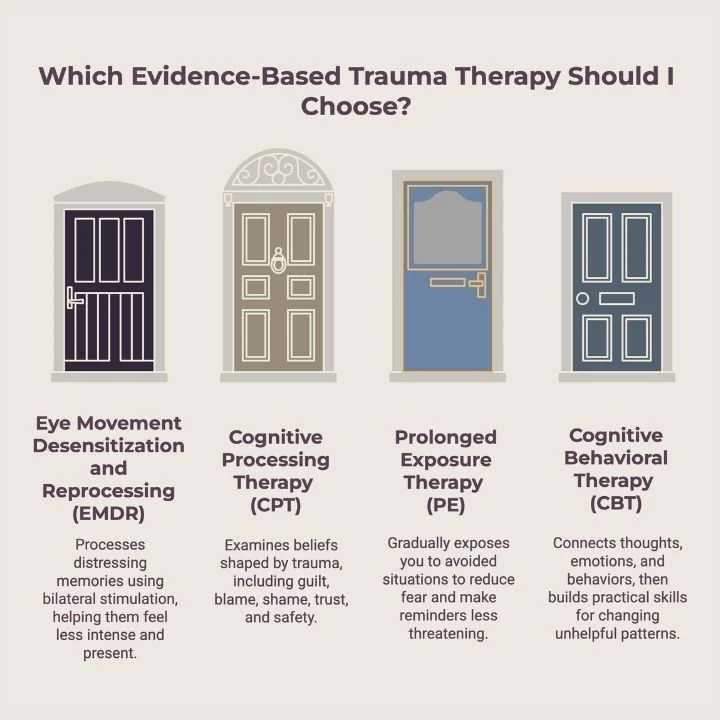
Evidence-based trauma therapies include Eye Movement Desensitization and Reprocessing (EMDR), Cognitive Processing Therapy (CPT), Prolonged Exposure Therapy (PE), and Cognitive Behavioral Therapy (CBT) for trauma. They differ in how they address memories, beliefs, and avoidance.
Eye Movement Desensitization and Reprocessing
EMDR helps you work through distressing memories so they feel less emotionally charged in the present. During EMDR, you briefly focus on a target memory while using bilateral stimulation, such as guided eye movements, alternating taps, or tones.
Areview of 24 randomized controlled trials found positive effects of EMDR for emotional trauma and other adverse life experiences.
Cognitive Processing Therapy
CPT is a structured trauma-focused talk therapy. It was developed for post-traumatic stress disorder (PTSD) and can also help with trauma-related guilt, shame, self-blame, and mistrust.
CPT helps you reconsider unhelpful conclusions about what happened through a clear, guided process that may include writing exercises and practice between sessions.
Prolonged Exposure Therapy
PE is a structured trauma-focused therapy that reduces fear by helping you gradually approach what trauma has made difficult to face. With a therapist, you may revisit the memory and slowly return to safe places, activities, or situations you avoid. The goal is to help reminders feel less threatening, not to push you into experiences before you feel ready.
Cognitive Behavioral Therapy for trauma
CBT for trauma is a structured form of talk therapy that helps you understand the link between trauma-related thoughts, emotions, and actions. It can help you notice patterns such as avoiding triggers, withdrawing from others, or expecting danger, then practice more helpful responses.
CBT therapy in Manhattan uses these practical tools to address anxiety and patterns of avoidance.
How to choose the right trauma treatment for your needs

Treatment selection should be based on your current symptoms, trauma history, functional impairment, and treatment goals. A clinician also considers previous therapy, co-occurring concerns, current stressors, and your ability to take part in structured work between sessions.
EMDR may be discussed when distressing memories or flashbacks remain active. CPT may be helpful when self-blame, guilt, or shame are prominent. PE is often used when fear has led to ongoing avoidance. Trauma-focused CBT can help address the connection between triggers, thoughts, emotions, and behavior.
| Primary Concern | Treatment That May Be Discussed |
|---|---|
| Intrusive thoughts, self-blame, guilt, or shame | Cognitive Processing Therapy (CPT) |
| Flashbacks or distressing memories | Eye Movement Desensitization and Reprocessing (EMDR) |
| Fear and trauma-related avoidance | Prolonged Exposure Therapy (PE) |
| Triggers, anxious thinking, and avoidance patterns | Trauma-focused Cognitive Behavioral Therapy (CBT) |
You do not need to know which therapy you need before reaching out. A thorough assessment helps clarify the approach and pace that fit the work ahead.
What to expect from trauma therapy in NYC

Trauma therapy begins with understanding what is happening now, not with pressure to tell your full story immediately.
Early sessions usually focus on your symptoms, history, current stressors, goals, and any safety or stabilization needs. Your therapist may also explain how trauma affects the nervous system and discuss the treatment methods that may be useful.
As therapy progresses, the work can include building coping skills, addressing avoidance, processing traumatic memories, and changing beliefs that keep you feeling stuck. Treatment should move at a pace that supports your ability to stay grounded during and between sessions.
Progress is not always about never feeling triggered again. It can show up through better sleep, less disruption from reminders, more space between a trigger and your reaction, or greater ability to take part in work, relationships, and daily life.
Start evidence-based trauma treatment in NYC
Trauma can continue to shape your life long after the original experience has passed, but treatment can help you understand those patterns and respond differently to them.
CBT / EMDR Therapy of Manhattan provides evidence-based therapy for trauma, anxiety, OCD, panic, depression, and relationship stress. Care is available in person near Columbus Circle and online across New York.
Schedule a Free Consultation to discuss your concerns, treatment goals, and next steps.
Common questions about evidence-based trauma treatment
What are signs of unhealed trauma?
Signs can include intrusive memories, avoidance, nightmares, hypervigilance, emotional numbness, shame, sleep problems, or strong reactions to reminders. These patterns can also occur with other mental health concerns, so an assessment can help clarify what is happening.
What is the most effective therapy for trauma?
There is no single therapy that is best for every person. EMDR, CPT, prolonged exposure, and trauma-focused CBT all have research support. The best fit depends on your symptoms, history, goals, and readiness.
What is better for trauma, CBT or EMDR?
CBT and EMDR can both help with trauma-related symptoms. CBT focuses more directly on thoughts, behaviors, and coping skills, while EMDR focuses on processing emotionally charged memories. A clinician can help determine which approach fits your needs.
Who may not be a good candidate for EMDR?
EMDR may need to wait if you are not yet able to stay grounded during distress, do not have a safe environment, or need more support managing intense symptoms. Therapy can begin with stabilization skills before memory processing.
Where can I find trauma therapy in NYC?
CBT / EMDR Therapy of Manhattan offers in-person trauma therapy near Columbus Circle at 330 West 58th Street, Suite 307, and online therapy across New York. Contact us to discuss availability and next steps.