
How to Find an EMDR Therapist in NYC Who Fits Your Needs
To find an EMDR therapist in NYC, verify an active New York license, formal EMDR training, relevant clinical experience, preparation process, fees, availability, and therapeutic fit. An EMDR therapist in Midtown Manhattan should explain their qualifications and treatment approach clearly before therapy begins.
Directories, referrals, and reviews can help you build a shortlist. Independent license verification and a direct consultation provide a more reliable basis for comparing therapists. The seven checks below can help you evaluate the details that matter.
7 essential checks for finding an EMDR therapist in NYC
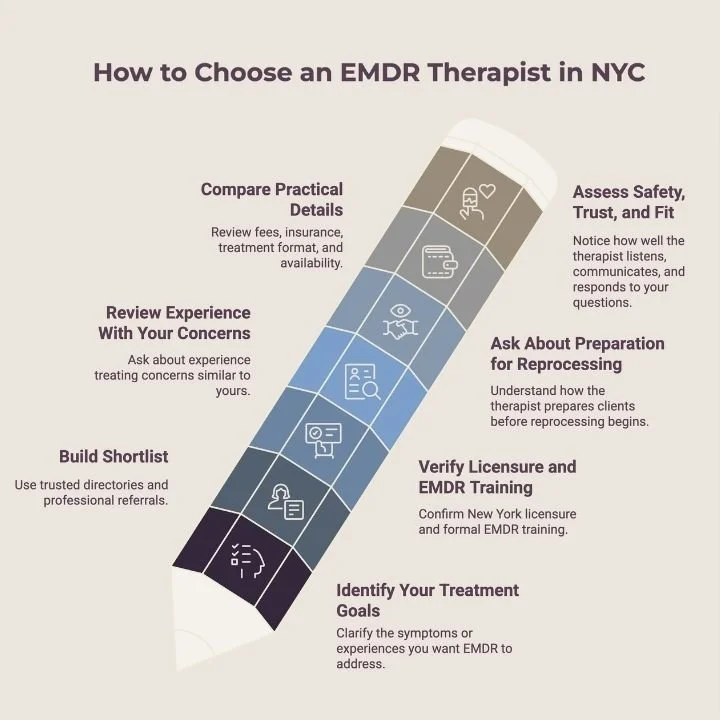
Use the same criteria for every provider so you can compare qualifications, services, costs, and fit consistently.
1. Define what you want EMDR to address
Start with the symptoms, experiences, or patterns you want help with. Your priorities may include PTSD, a single traumatic event, childhood trauma, panic connected to a distressing experience, or another concern.
A clear goal makes it easier to identify therapists who regularly treat similar needs. You don’t need a diagnosis or a complete trauma narrative before contacting someone. A qualified clinician can assess your symptoms and help determine the most appropriate treatment plan.
2. Build a shortlist through reputable directories and referrals
Use the EMDR International Association therapist directory, professional directories, and referrals from a physician or current therapist as starting points. A general web search can also help you find local practices and review their services.
A directory listing doesn’t confirm that a provider’s license, registration, training, or availability is current. Verify those details independently before scheduling treatment.
3. Verify their New York license and formal EMDR training
Search the therapist’s name through the New York State Education Department’s online license-verification service. Confirm the profession, license number, and registration status. The name and profession should match the information on the therapist’s website or profile.
Next, ask which EMDR training program the therapist completed. EMDR basic training and EMDR certification are different credentials. EMDRIA-approved basic training equips eligible mental health clinicians to use EMDR within their license, competence, supervision, and applicable regulations. EMDRIA certification is a voluntary credential that requires additional clinical experience, consultation, and continuing education.
Certification isn’t required for an appropriately trained clinician to provide EMDR. The therapist should still be able to describe their training, consultation, experience, and use of the treatment.
4. Review their experience with your treatment needs
Choose a therapist who regularly works with concerns similar to yours. EMDR follows a structured protocol, and its use still needs to reflect your symptoms, history, risks, and treatment goals.
Ask how often the therapist uses EMDR with your primary concern and how they track progress. If your treatment may also involve Cognitive Behavioral Therapy, exposure-based treatment, or another approach, ask how those methods would be coordinated.
5. Assess how they prepare clients for reprocessing
Preparation is part of EMDR treatment. Before reprocessing begins, the therapist should gather relevant history, assess readiness and safety, explain the process, identify treatment goals, and develop strategies for managing distress.
Ask how the therapist responds when a client becomes overwhelmed, dissociates, or has difficulty staying present. Their answer should reflect flexible pacing, regular check-ins, and a clear plan for closing sessions safely.
6. Compare fees, insurance, format, and availability
Compare the practical details before choosing a provider:
Session fee and appointment length
In-network or out-of-network status
Superbill or insurance-claim support
Weekly sessions or EMDR intensives
In-person and virtual options
Current availability and cancellation policies
Ask an out-of-network provider to explain the full upfront fee, superbill or claim-submission support, and payment schedule. Confirm your benefits directly with the insurer because reimbursement depends on the individual plan and isn’t guaranteed.
7. Use the consultation to evaluate safety, trust, and fit
A consultation can show how clearly the therapist communicates and how comfortable you feel asking questions. Notice if the therapist listens carefully, explains recommendations, respects your concerns, and avoids promises about results or timelines.
Therapeutic fit can support trust, engagement, and honest communication. Progress also depends on clinical judgment, treatment suitability, attendance, and factors specific to the client’s situation.
Talk with an NYC EMDR therapist about your treatment goals
A consultation gives you space to discuss your concerns, previous treatment, goals, and questions about EMDR. You should leave with a clearer understanding of the therapist’s training, preparation process, recommended format, fees, and next steps.
CBT EMDR Therapy of Manhattan provides in-person therapy at 330 West 58th Street, Suite 307, in New York City, and online therapy across New York. Ask about a free consultation to discuss your needs with an EMDR therapist.
Common questions about EMDR therapy in NYC
What issues is EMDR good for?
EMDR has its strongest research support for PTSD. Clinicians may also use it when distressing memories contribute to anxiety, panic, phobias, grief, or other concerns, although the evidence varies by condition. A clinical assessment should determine how EMDR fits into your treatment.
When might someone need more preparation before EMDR?
More preparation may be needed during an immediate safety crisis, severe destabilization, or difficulty staying oriented during trauma-focused work. Substance use alone does not create a permanent exclusion, and concurrent treatment for PTSD and substance use can be appropriate.
How long does EMDR treatment usually take?
There is no universal EMDR timeline. Treatment length depends on your symptoms, trauma history, number of treatment targets, preparation needs, goals, and response to therapy. Your therapist should assess progress and adjust the plan as treatment continues.
How much does EMDR cost in NYC?
EMDR has no standard price in NYC. Fees vary by provider, credentials, session length, treatment format, and practice policies. Ask for the full session fee, payment schedule, cancellation policy, and insurance-support options before booking.
Is EMDR therapy covered by insurance in NYC?
Sometimes. Coverage depends on your plan, benefits, diagnosis, provider network status, and medical-necessity requirements. Confirm your benefits directly with the insurer, and ask the therapist about superbills or claim submission. Out-of-network reimbursement isn’t guaranteed.