
Your first eye movement desensitization and reprocessing (EMDR) session usually focuses on your concerns, relevant history, and preparation for treatment. Your therapist explains the method and may introduce ways to manage distress and signal a pause.
EMDR therapy follows eight phases, from history-taking and preparation through memory work and follow-up. These phases can span several appointments, so the first visit doesn’t have to reach memory reprocessing.
For a clearer picture of what to expect in your first EMDR session, follow the fictional appointment below from intake to the closing check-in.
How to prepare for your first EMDR session

You don’t need to write a detailed trauma script or recall every memory before the appointment. Your therapist will guide the history-taking and help decide what needs attention.
EMDR first session checklist:
- Current difficulties: What happens, when it began, and how it affects sleep, work, or relationships.
- Previous care: Treatments that helped, uncomfortable experiences, and medications you take.
- Responses to distress: Going numb, losing track of time, or feeling disconnected from your surroundings.
- Questions for the therapist: Pacing, pause signals, fees, and support between visits.
Confirm the appointment length and format. For an online visit, check your connection and arrange privacy. Leave some flexibility afterward when possible, and tell your therapist if you feel nervous about sharing so they can pace the conversation accordingly.
An EMDR session example from intake to wrap-up

This fictional EMDR session example follows an adult seeking help after a traffic collision. Your appointment may follow a different pace.
1. Explain what brought you to therapy
Describe the difficulties that led you to book. The person says, “I keep seeing the crash when I try to sleep, and I avoid the intersection.”
The therapist asks about frequency, sleep, concentration, and travel. They agree on a treatment priority, such as commuting without taking a long detour, to give treatment a clear focus.
2. Share your history at your own pace
The therapist reviews earlier experiences, health, previous care, and available support to assess how EMDR might fit. They also discuss expected benefits, possible discomfort, and alternatives so the person can make an informed decision.
When one part of the collision feels too difficult to describe, the person says so. The therapist respects that limit, explains any information still needed, and adjusts the conversation. They also check for reactions such as numbness or feeling disconnected, which can affect preparation and pacing.
3. Review grounding, eye movements, and how to pause
The therapist teaches a grounding exercise, such as noticing the feet on the floor or objects in the room, to bring attention back to the present. If an exercise makes you more uncomfortable, tell the therapist so they can offer a different option.
They demonstrate bilateral stimulation—the side-to-side eye movements, taps, or sounds used in EMDR. In this example, the demonstration is preparation, not memory reprocessing. Memory work follows assessment and preparation once the therapist and client agree to proceed.
The person practices raising a hand to pause, and the therapist stops to check how they’re feeling. EMDRIA’s guide to experiencing EMDR explains that clients can stop at any point and that preparation teaches skills for managing distress during and between sessions.
4. Check in before you leave and plan the next visit
The therapist checks the person’s distress and connection to the present, then agrees on support between visits. If discomfort remains, the closing plan covers how to respond.
The person leaves with a grounding exercise, instructions for recording changes in sleep or symptoms, and contact arrangements. The next visit may continue preparation or assess a memory selected for treatment.
When does memory reprocessing begin in EMDR?

Desensitization begins in phase four, after history-taking, preparation, and target assessment. During assessment, your therapist identifies a memory and its associated beliefs, emotions, and body sensations, and asks you to rate distress. These early phases may span several appointments.
You focus on the memory while your therapist guides sets of eye movements, taps, or sounds. Between sets, you report thoughts, images, emotions, or body sensations that arise.
EMDRIA’s eight-phase guide describes the next stages as strengthening a preferred belief connected to the memory and checking for remaining physical distress. The work can continue across appointments.
What to expect after your first EMDR session
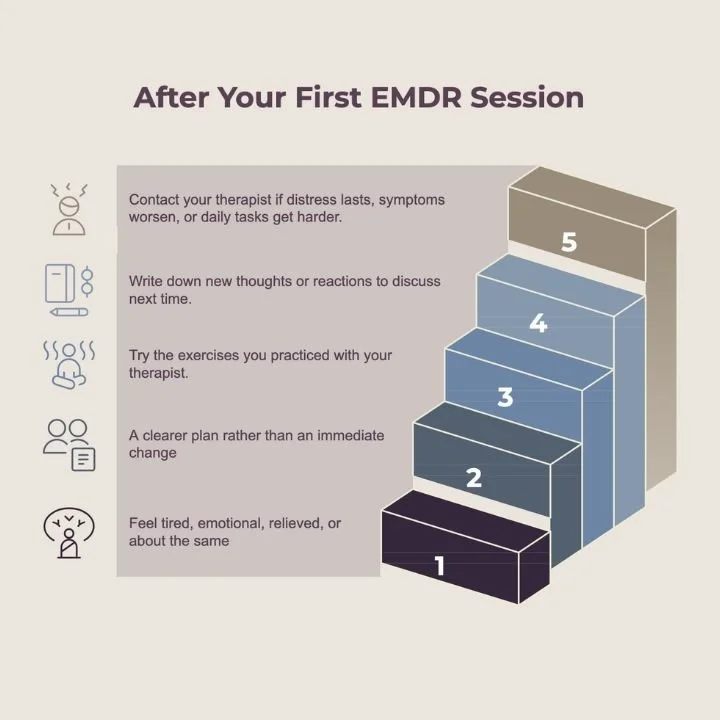
You might feel tired, emotional, relieved, or about the same after your first visit. If the appointment focused on history and preparation, you can leave with a clearer plan rather than an immediate change in symptoms.
Use the coping exercises you practiced during the session, and note any new thoughts or reactions for your next visit.
Contact your therapist if distress persists, symptoms worsen, or daily activities become harder.
Schedule a free EMDR consultation with a Manhattan therapist
The first appointment gives you time to learn about treatment and voice concerns. Your questions about sharing memories, pausing, and support deserve direct answers before you agree to proceed.
CBT / EMDR Therapy of Manhattan offers in-person appointments near Columbus Circle and online care across New York. Schedule your free consultation to talk about your concerns, therapist availability, and the care you’re seeking.
FAQs about your first EMDR appointment
How long does a first EMDR appointment last?
At CBT / EMDR Therapy of Manhattan, individual sessions are typically 45 minutes, with 60-minute appointments sometimes used for trauma therapy. Confirm the length of your first EMDR appointment when booking.
Is it normal to cry during an EMDR session?
Crying can happen when talking about painful experiences or working with memories. Other people feel tense, quiet, or numb. Tears don’t measure progress. Tell your therapist what you’re experiencing so they can respond to your needs and adjust the pace.
Can you do EMDR if you dissociate?
Sometimes. An EMDR clinician experienced in dissociation should assess your symptoms, safety, and ability to stay oriented during memory work. Preparation, pacing, or treatment methods may need to be adapted for dissociation.
Can you have your first EMDR session online?
Yes. Your first EMDR session can take place virtually, with assessment and preparation through live video. Arrange privacy, reliable audio and video, and a plan for connection problems. Your therapist should confirm your location and emergency arrangements.
What should you ask an EMDR therapist before booking?
Ask about EMDR training, experience treating your concerns, fees, and appointment length. Check how they handle preparation, pause requests, and contact between visits. Mention dissociation or past difficulties with therapy when relevant. Ask what alternatives are available if EMDR doesn’t fit your needs. Their answers should help you judge the fit without promises about a fixed recovery date.